🌿Native Gardening Tips and Landscape Guides for the Virginia Coastal Plain

Gardening in Hampton Roads isn't quite the same as gardening somewhere else.

Our coastal Virginia communities experience heavy rain, flooding, humid summer heat, hurricanes, nor'easters, clay soils, salt exposure and changing weather conditions. At the same time, our yards can provide valuable habitat for butterflies, bees, birds and other wildlife. 

That's why we're passionate about planting for the conditions we actually have.

Native plants are adapted to our region and can provide food and habitat for local wildlife while helping create healthier, more diverse landscapes.

<script async src="https://pagead2.googlesyndication.com/pagead/js/adsbygoogle.js?client=ca-pub-6545958482916591"
crossorigin="anonymous"></script>

🌿Tidewater Gardening Tips

🌿10 Best Native Plants for Clay Soil in Hampton Roads

You don't lack a green thumb; you just have clay soil. 

If you've ever tried to dig a garden bed in Norfolk, you already know: clay soil can be tough.

It can be heavy and compacted, hold water after a storm, and become surprisingly hard when it dries out. But having clay soil doesn't mean you have to give up on a beautiful garden.

The key is to work with your soil instead of constantly fighting it.

Choosing plants that are naturally adapted to the conditions found in Southeast Virginia can make establishing a garden much easier. The City of Norfolk's Native Plants for Southeast Virginia, including Hampton Roads guide is a great local resource for choosing plants based on sunlight, moisture and soil conditions.

Here are 10 native plants worth considering if you're gardening in Norfolk or the surrounding Hampton Roads region and dealing with clay soil.

Read the full article here.

🌿20 Native Edible Plants You Can Grow in Southeastern Virginia


What if your landscape could do more than look beautiful?

What if the trees, shrubs, vines, and flowers around your home could also provide food, support wildlife, improve soil, and help create a more resilient Norfolk?

When we think about edible gardening, we often picture raised vegetable beds, tomatoes, peppers, and squash. But there is another option: native edible landscaping.

Many plants that naturally belong in our region produce fruits, nuts, tubers, seeds, or other edible parts. They can be incorporated into an intentionally designed landscape rather than separated into a traditional vegetable garden.

Here are 20 native edible plants worth knowing about in the Norfolk and Tidewater region.


Read the full article here. 

🌿Skip the Pesticides: Plant a Fall Garden That Fights Garden Pests Naturally


There’s something wonderful about a fall vegetable garden. The heat begins to break, the soil is still warm, and crops like kale, broccoli, cabbage, lettuce, spinach, carrots, and radishes are ready to take center stage.


But fall gardens can also bring their share of pests—aphids, caterpillars, and other hungry insects looking for one last buffet before winter.

Before reaching for the pesticide, consider a different approach:

Plant a garden that invites the good bugs in.

Instead of trying to eliminate every insect, we can create a garden ecosystem where beneficial insects help keep pest populations in check. And some of the best helpers can be planted right alongside your fall vegetables.


Read the full article here.

🌿Beyond the Lawn: Four Native Groundcovers for a More Beautiful Hampton Roads Yard

There’s nothing immediately charming about a patch of lawn. We all love a little green carpet beneath the old oak. A place for the kids to run barefoot. A tidy edge along the flower beds. But softening the edges adds the real cottage charm.  

Think of turf more like an area rug and less like wall-to-wall carpeting. 

Sometimes, the prettiest answer is to let the garden grow a little closer to the ground. Cascade the edges with a gentle variation from grass into the borders to create vignettes throughout your yard. 

Groundcovers can soften a landscape, fill those awkward bare spots, help hold soil in place and give wildlife something more useful than a perfectly clipped patch of grass. And if we choose plants suited to our region, we can create a yard that feels right at home along the Coastal Plain.

So, pull up a garden chair and let’s talk about four lovely groundcovers worth knowing.


Read the full article here. 

🌿How to Get Rid of Spider Mites Naturally: 7 Ways to Save Your Plants

Spider mites are tiny, but they can cause surprisingly big problems in the garden.

They thrive during hot, dry conditions and can quickly move from a few damaged leaves to an entire plant. If you've noticed tiny pale spots on your leaves, yellowing foliage, fine webbing, or a plant that seems to be declining for no obvious reason, spider mites may be the culprit.

The good news? You don't always need a harsh pesticide to get them under control.

There are several lower-impact approaches you can try, from a strong spray of water to insecticidal soap, horticultural oil and neem-based products.


Read the full article here. 

🌿 September Garden Checklist for Hampton Roads

🌱 September's BIG goal

September isn't about cleaning up the garden.
It's about preparing it for what's next.

🌾 Collect seeds
🌱 Plant natives
🐝 Feed late-season pollinators
🍂 Prepare for leaves
✂️ Resist the urge to cut everything back
🌿 Plan your fall garden

See the full article here. 

🌿Gardening by the Bay: How to Create a Coastal-Friendly Yard in the 757

If you garden anywhere around Norfolk, Virginia Beach, Chesapeake, Portsmouth, Hampton, or the surrounding Tidewater communities, you quickly learn that gardening here comes with its own set of rules.

We have heat and humidity.

We have heavy clay in some neighborhoods and sandy soil in others.

We have strong coastal winds, salt spray, high tides, heavy rain, and the occasional storm that reminds us just how close we are to the Chesapeake Bay.

And then there are those beautiful waterfront views that make it all worth it.

Read the full article here. 

🌿Norfolk Has Had Plenty of Rain—So Why Are We in a Drought?

Understanding Norfolk's rainfall deficit and what it means for our gardens

If you've spent much time in Norfolk this summer, the word drought might seem a little strange.

We've had rain.

We've had summer thunderstorms, sudden downpours, soggy yards, and plenty of days when it seemed like the clouds just wouldn't quit.

So how can Norfolk still be behind on rainfall?

The answer is found by looking at the year-to-date rainfall total, rather than simply remembering how much rain we've had recently.

Read more here. 


🌿Landscape Designs & Guides

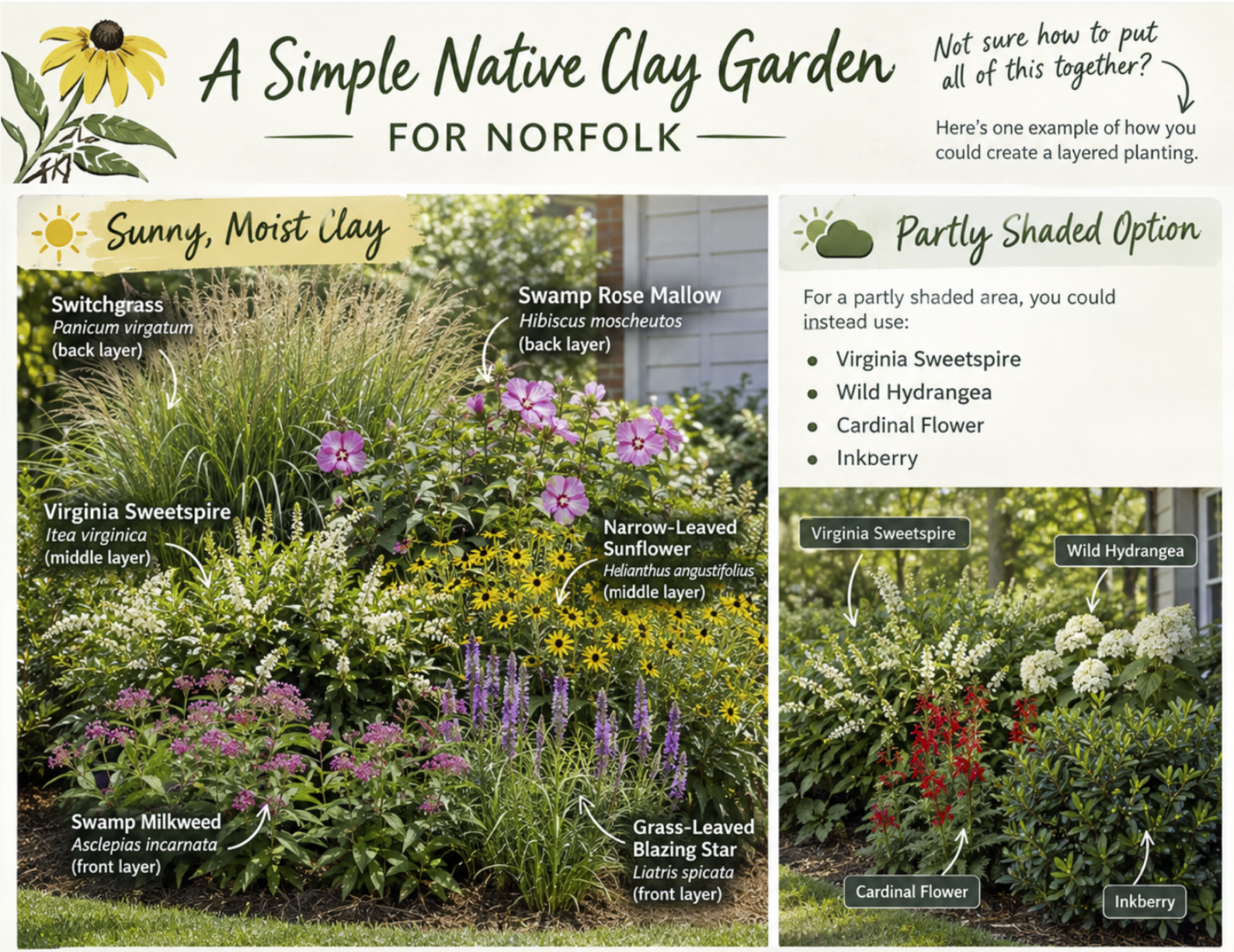
Simple Clay Soil Design

Designed by Root and Bloom Norfolk.

This design provides a simple guide to making clay soil easy to manage. You don't need a green thumb to keep these alive and thriving. 
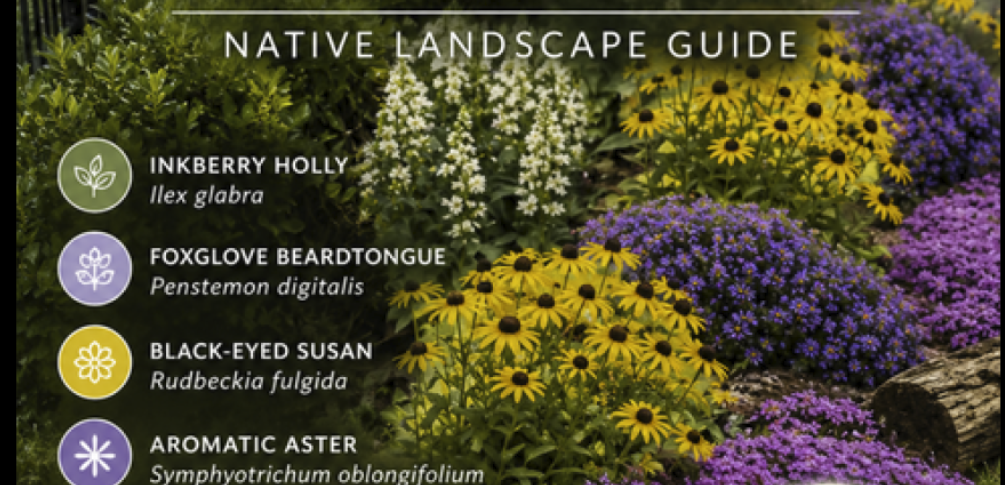
Full Sun Border Landscape Guide

Designed by Root and Bloom Norfolk.

This design layers native plants to provide year-round
color, food, and habitat while creating a low maintenance
landscape that works with nature.