

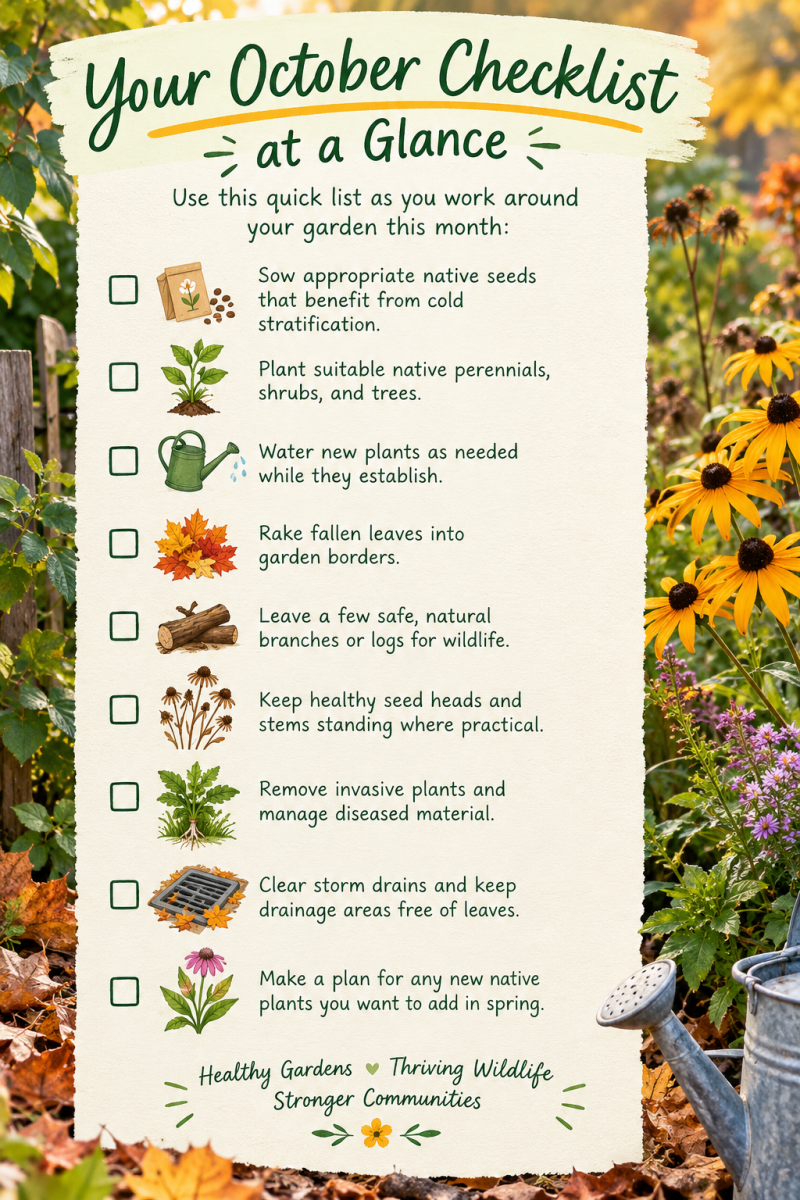
Five simple ways to make your garden more beautiful, resilient, and welcoming to wildlife this fall.
October in Hampton Roads brings cooler temperatures, colorful leaves, and the perfect opportunity to prepare our gardens for spring. While many of us are tempted to put the garden to bed for winter, fall is actually one of the most important seasons for creating a thriving native landscape.
From Norfolk to Virginia Beach and throughout Tidewater, a little work now can help your plants establish strong roots, give native seeds the conditions they need to germinate, and provide valuable habitat for wildlife through the colder months.
Ready to make the most of the season? Here is your October checklist!
1. Sow Native Seeds That Need Cold Stratification
Did you know some native wildflower seeds need a period of cold, moist conditions before they can sprout? This natural process is called cold stratification, and it helps prepare seeds for germination when spring arrives.
In nature, seeds fall to the ground in autumn, experience winter's cold temperatures, and begin growing when conditions become favorable. You can work with that natural cycle by sowing suitable native seeds this fall.
Depending on the species, seeds you might consider include:
-
Wild columbine (Aquilegia canadensis)
-
Milkweeds, including species that benefit from cold stratification
-
Black-eyed Susan (Rudbeckia hirta), depending on the seed source and species requirements
Always check the germination instructions for your particular species. Some seeds germinate readily without cold stratification, while others benefit from several weeks or months of cold, moist conditions. Certain species may need additional treatments.
Garden tip: Label your seeds after sowing so you remember what you planted and where to look for new growth in spring. Let nature do some of the work for you!
2. Plant Native Perennials While the Weather Is Cool
Fall is a wonderful time to plant many container-grown native perennials, shrubs, and trees in Hampton Roads.
As temperatures cool, plants can direct more energy toward root development rather than coping with summer heat. Planting in October gives many species time to establish their roots before the demands of spring growth and the next summer's heat arrive.
Consider adding native plants suited to your garden's conditions, such as:
-
Blue wood aster for lovely fall blooms and pollinator appeal.
-
Virginia sweetspire for a native shrub with seasonal interest.
-
Inkberry for evergreen structure and wildlife value.
-
Christmas fern for a touch of year-round woodland greenery.
-
Switchgrass for graceful texture, habitat, and winter interest.
Choose plants based on your site's sunlight, soil moisture, drainage, and available space. Native does not automatically mean every plant will thrive in every yard!
After planting, water thoroughly and continue watering as needed while the roots establish, especially during dry spells. Avoid planting too deeply, and use a light layer of mulch around the root zone without piling it against stems or trunks.
Garden tip: Don't wait until spring to start your garden. A well-chosen plant installed this fall can have a valuable head start when warmer weather returns.
3. Leave the Leaves in Your Garden Borders
Before you bag up every fallen leaf, consider letting some of them stay!
Fallen leaves are a natural part of a healthy garden ecosystem. They help protect the soil, contribute organic matter as they break down, and provide shelter for insects and other small creatures. Some beneficial insects and pollinators spend part of their life cycle in leaf litter.
Instead of sending every leaf to the curb, rake them into your garden borders and beneath trees and shrubs where they can form a natural protective layer.
This simple habit can help:
-
Improve soil structure as leaves decompose.
-
Protect soil from temperature swings.
-
Support beneficial insects and other wildlife.
-
Reduce the amount of yard waste sent to landfills.
You don't have to leave every leaf exactly where it falls. Keep leaves away from storm drains, sidewalks, and areas where thick layers could smother delicate plants. Shredding some leaves can also help them break down more readily.
Garden tip: Think of fallen leaves as free garden mulch, not just yard waste!
4. Keep a Few Fallen Logs and Branches
A tidy garden doesn't have to be a lifeless garden.
Whenever practical, leave a few fallen branches, small logs, or pieces of natural wood tucked into your garden borders. These natural materials create shelter and hiding places for insects, spiders, amphibians, and other small wildlife.
Decaying wood also contributes organic matter to the soil over time. When combined with native plants and leaf litter, it helps create a more varied habitat right in your own backyard.
You can make this look intentional by arranging a few branches near the base of a shrub, placing a small log along the edge of a woodland-style garden, or incorporating natural wood into a less formal border.
A few thoughtful choices can give your garden a softer, more natural appearance while making it more welcoming to wildlife.
Garden tip: Keep wood away from your home's foundation, avoid blocking walkways, and don't leave branches where they could create a hazard. If your yard has pest concerns, choose locations thoughtfully.
5. Give Your Garden a Gentle Fall Cleanup
October is a great time to tidy up without removing every sign of nature.
Rather than cutting everything back, take a closer look at what your garden can offer wildlife through winter.
Consider these simple steps:
-
Leave healthy native flower stems and seed heads standing where practical. Birds may feed on seeds, while hollow or pithy stems can shelter overwintering insects.
-
Remove diseased plant material when necessary to limit the spread of certain plant diseases.
-
Pull invasive plants before they spread their seeds.
-
Clear leaves from storm drains and drainage areas to help rainwater flow.
-
Add a little compost to garden beds where appropriate.
-
Check newly planted trees and shrubs and water them during dry periods.
You can still keep paths, entrances, and frequently used spaces neat. The goal isn't to abandon your garden; it's to make room for the natural processes that help it thrive.
A garden with seed heads, fallen leaves, and a few weathered branches can be beautiful in its own right.
Why Fall Gardening Matters in Hampton Roads
Here in coastal Virginia, our gardens experience hot summers, periods of heavy rain, occasional flooding, and changing seasonal conditions. Choosing regionally appropriate native plants and caring for our soil can help create landscapes that are better suited to local conditions.
Native plants can provide food and habitat for local wildlife, while established roots help hold soil in place. Trees, shrubs, and healthy garden beds can also contribute to shade and the management of rainwater when they're thoughtfully placed.
And the best part? Many of these benefits begin with small, manageable changes.
You don't need to transform your entire yard in one weekend. Start with a few native seeds, a new perennial, or a border where the leaves can stay.
Every little patch of habitat counts.
Let's Grow Something Good This Fall
Fall is a reminder that gardening isn't always about doing more. Sometimes, it's about working with nature instead of against it.
By sowing native seeds, planting for strong roots, leaving the leaves, and making room for natural habitat, we can help our yards become healthier places for people, plants, and pollinators.
So, before you put away your gardening gloves for the season, choose one small thing you can do this October.
Your spring garden may thank you for it!
Growing native, one yard at a time.
Root & Bloom Norfolk | Serving Tidewater
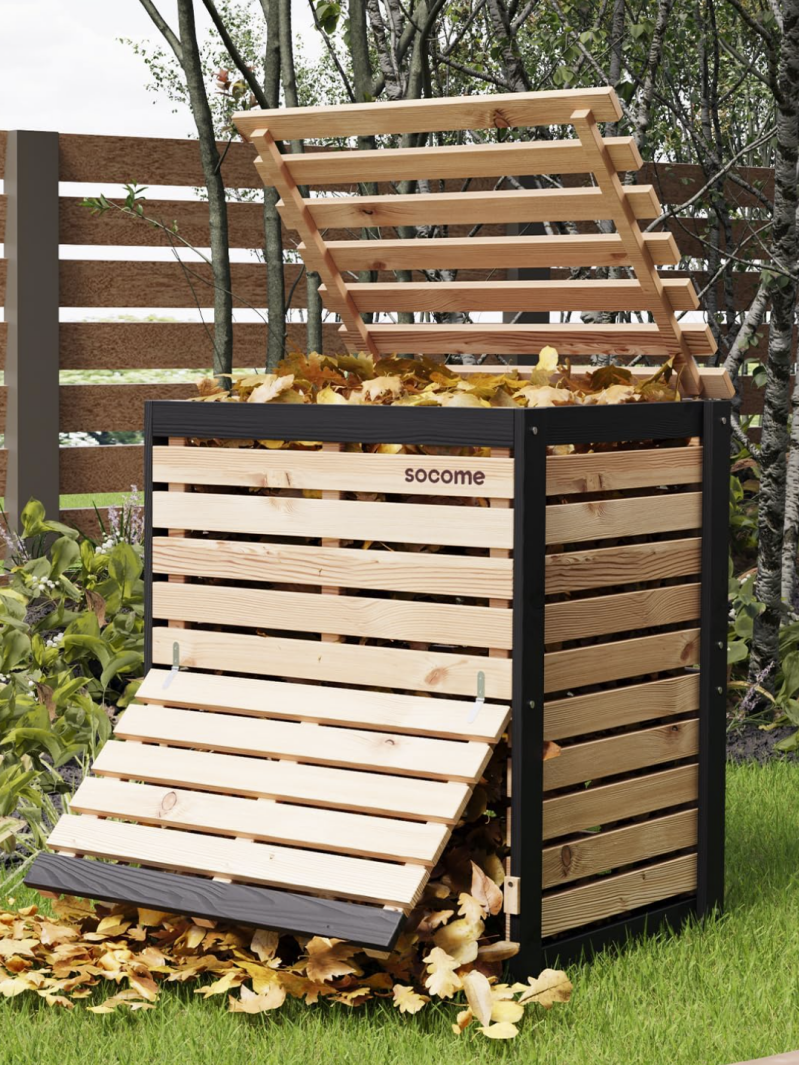
If you simply must rake them up, here is a great product to transform them into nutrient-rich compost to put back in the beds. We love this composter because designed with wooden slats that enhances airflow. Plus, a wooden compost bin speeds up the natural decomposition of kitchen scraps and leaves. It improves soil without affecting by plastic, in line with natural composting principles for good composting results.
Fall Woodland's Edge Garden - Plant Bundle

Root & Bloom Norfolk | Growing native, one yard at a time.
A naturalistic woodland-edge garden that brings together delicate foliage, late-season color, and native pollinator support. This five-plant bundle is designed for a layered, woodland-inspired look that feels lush without looking overly formal.
Amazon Affiliate Disclosure: Root & Bloom Norfolk is a participant in the Amazon Services LLC Associates Program, an affiliate advertising program designed to provide a means for sites to earn advertising fees by advertising and linking to Amazon.com. We may earn a commission from qualifying purchases made through our links, at no additional cost to you. Thank you for supporting Root & Bloom Norfolk!
