

Bring beautiful purple-blue blooms, pollinator-friendly color, and a little more native beauty to your fall garden.
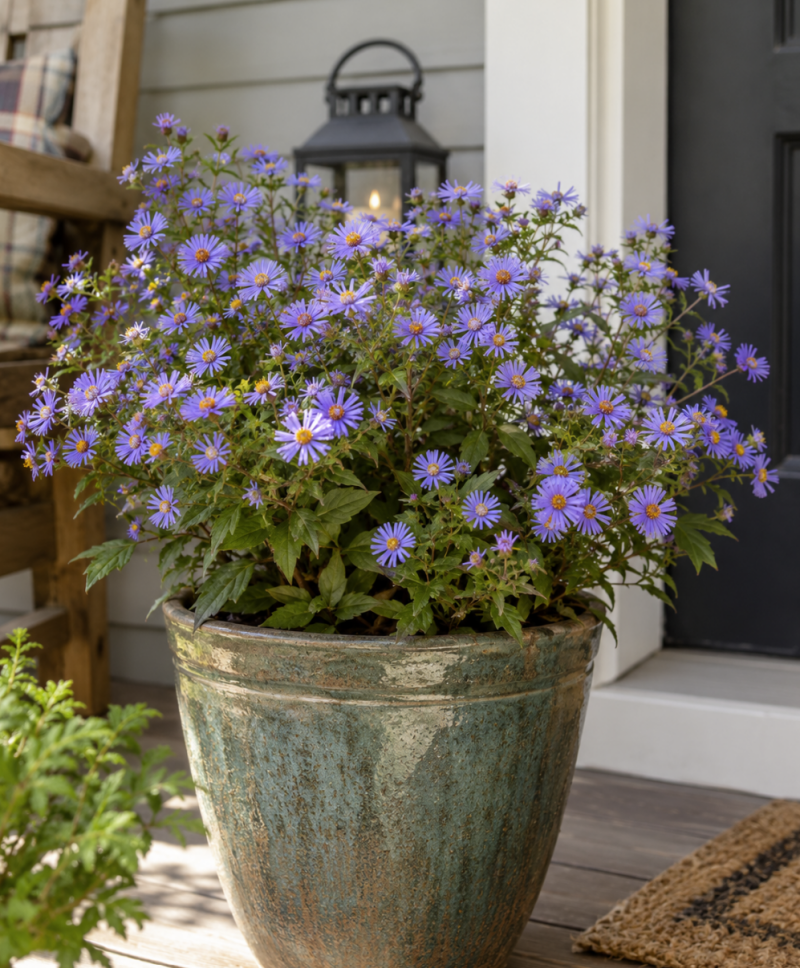
When autumn arrives in Hampton Roads, porches and garden centers fill with colorful chrysanthemums, better known as mums. While mums are a familiar fall favorite, there is another plant worth considering if you want to bring seasonal color to your landscape while supporting local wildlife: Blue Wood Aster (Symphyotrichum cordifolium).
With its delicate blue-violet flowers and natural, graceful growth habit, Blue Wood Aster offers a beautiful way to celebrate the season. Best of all, it is a native perennial that can return year after year when planted in suitable conditions.
Why Choose Blue Wood Aster for Fall Color?
Blue Wood Aster produces clusters of small, daisy-like flowers in shades of pale blue, lavender, and violet. Its cheerful blooms stand out beautifully against green foliage and pair wonderfully with the warm golds, oranges, and browns of autumn.
If you love decorating your front porch with fall flowers, consider placing Blue Wood Aster in a container near your entryway or incorporating it into a woodland-inspired garden bed.
Unlike many seasonal mums that are purchased primarily for a single season of display, Blue Wood Aster can become a lasting part of your garden. Although it may not have the same dense, rounded appearance as a traditional mum, its airy flowers create a softer, more natural look.
Our tip: Pair Blue Wood Aster with ornamental grasses, rustic planters, and other fall foliage for a welcoming autumn display.
A Fall Flower That Gives Back to Nature
One of the best reasons to plant Blue Wood Aster is its value to pollinators.
As the growing season winds down, flowering plants become increasingly important sources of nectar and pollen for bees and other beneficial insects. Blue Wood Aster's late-season flowers help provide these resources when fewer plants are blooming.
By choosing native plants, you can make your outdoor spaces more than decorative. Your porch, garden, or backyard can become a small part of a healthier local ecosystem.
For gardeners in Norfolk and throughout Hampton Roads, planting native flowers is one practical way to support the wildlife that shares our neighborhoods.
Growing Blue Wood Aster in Hampton Roads
Blue Wood Aster is a wonderful choice for woodland edges, naturalized landscapes, and gardens with partial shade.
Here are a few growing tips to help it thrive:
-
Light: Partial shade to shade; it can tolerate some sun when moisture conditions are suitable.
-
Soil: Adaptable to a range of soils, particularly those with organic matter.
-
Water: Water regularly while establishing. Avoid letting container-grown plants dry out completely.
-
Garden placement: Try woodland borders, shaded garden beds, or naturalistic planting combinations.
-
Seasonal interest: Enjoy its blue-violet flowers in fall and allow the plant to contribute to your garden's natural seasonal cycle.
Blue Wood Aster can spread by self-seeding and may gradually form a naturalized grouping. Give it enough room to grow, and remove unwanted seedlings if you prefer a tidier garden.
Can You Grow Blue Wood Aster in a Pot?
Absolutely! Blue Wood Aster can be grown in a container, making it an appealing option for a porch, patio, or small outdoor space.
Choose a pot with drainage holes and enough room for the roots to develop. Use a quality potting mix, keep the soil consistently moist without waterlogging it, and place the container where the plant receives appropriate light.
Remember that container-grown perennials have less insulation than plants growing in the ground. During winter, protect the roots from extreme temperature swings and drying winds.
For a natural fall look, choose a weathered ceramic planter and let the flowers spill loosely over the foliage for a relaxed, cottage-garden feel.
Blue Wood Aster vs. Traditional Mums
Both plants can bring lovely color to a fall display, but they serve somewhat different purposes.
FeatureBlue Wood AsterTraditional Garden MumsFlower colorBlue, lavender, and violetMany colors, including yellow, orange, red, and purpleWildlife valueProvides nectar and pollen for pollinatorsValue varies by cultivar and flower structureLong-term useNative perennial that can returnOften treated as seasonal décor, although some varieties are perennialGarden styleNatural, woodland, and informalFull, rounded, and traditionalBest placementWoodland edges and partially shaded areasOften sunny beds and containers
If you love the traditional look of mums, there is no reason you cannot enjoy both. But if you are looking for a different kind of fall beauty—one that combines seasonal color with ecological benefits—Blue Wood Aster deserves a place on your list.
Growing Native, One Yard at a Time
At Root & Bloom Norfolk, we believe that beautiful landscapes can do more than look good. The plants we choose can support pollinators, contribute to healthier habitats, and help reconnect our neighborhoods with the natural world around us.
This fall, consider adding Blue Wood Aster to your garden. Whether you plant it along a woodland edge or feature it in a container on your porch, it is a lovely reminder that seasonal beauty and environmental benefits can grow together.
You do not have to give up fall color to grow native. You can have both.
🌿 Root & Bloom Norfolk — Growing native, one yard at a time.