

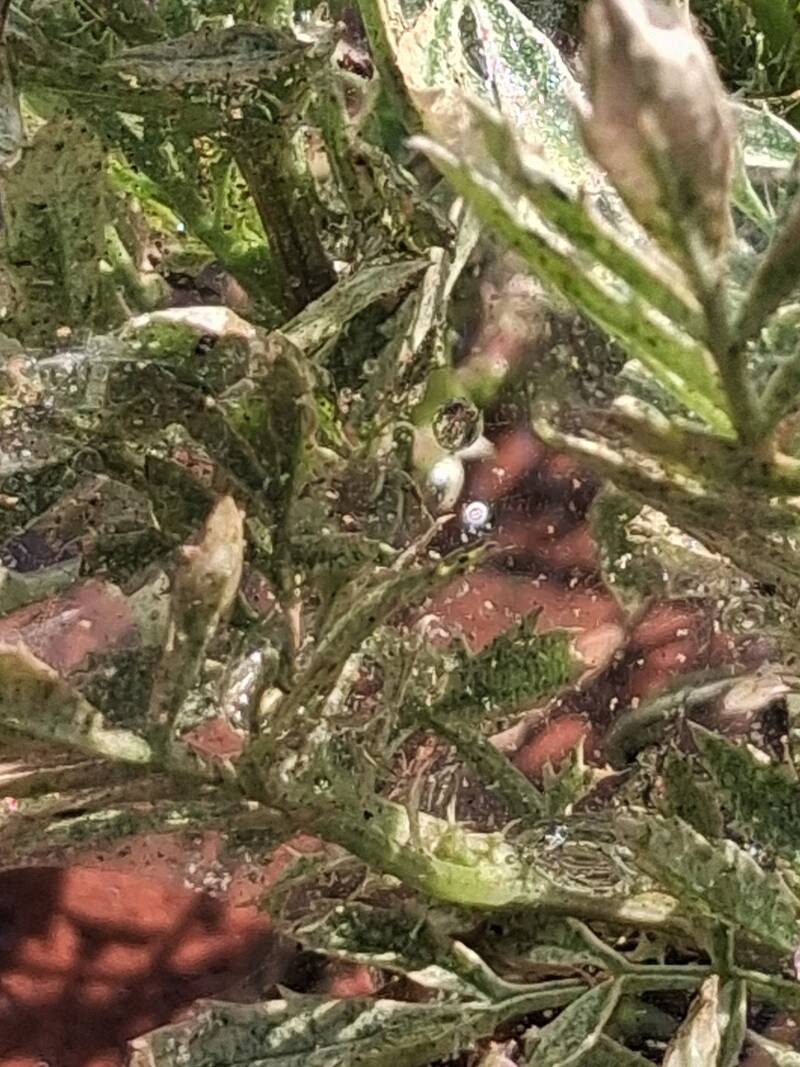
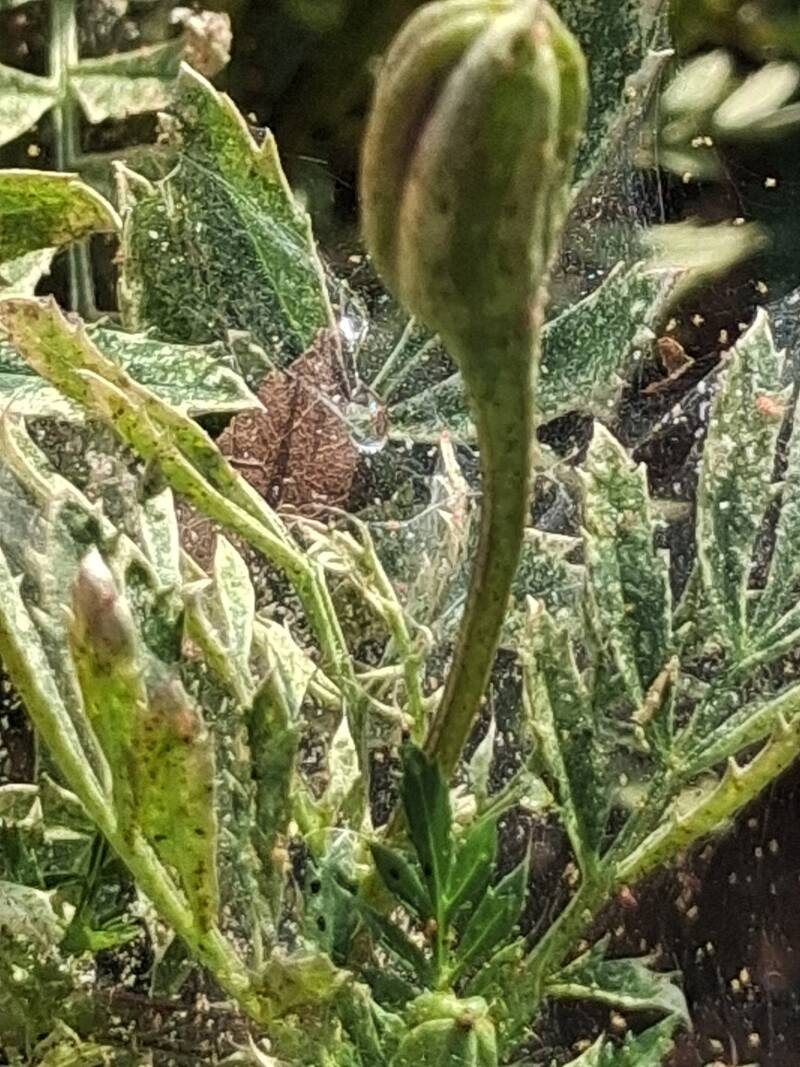
Spider mites are tiny, but they can cause surprisingly big problems in the garden.
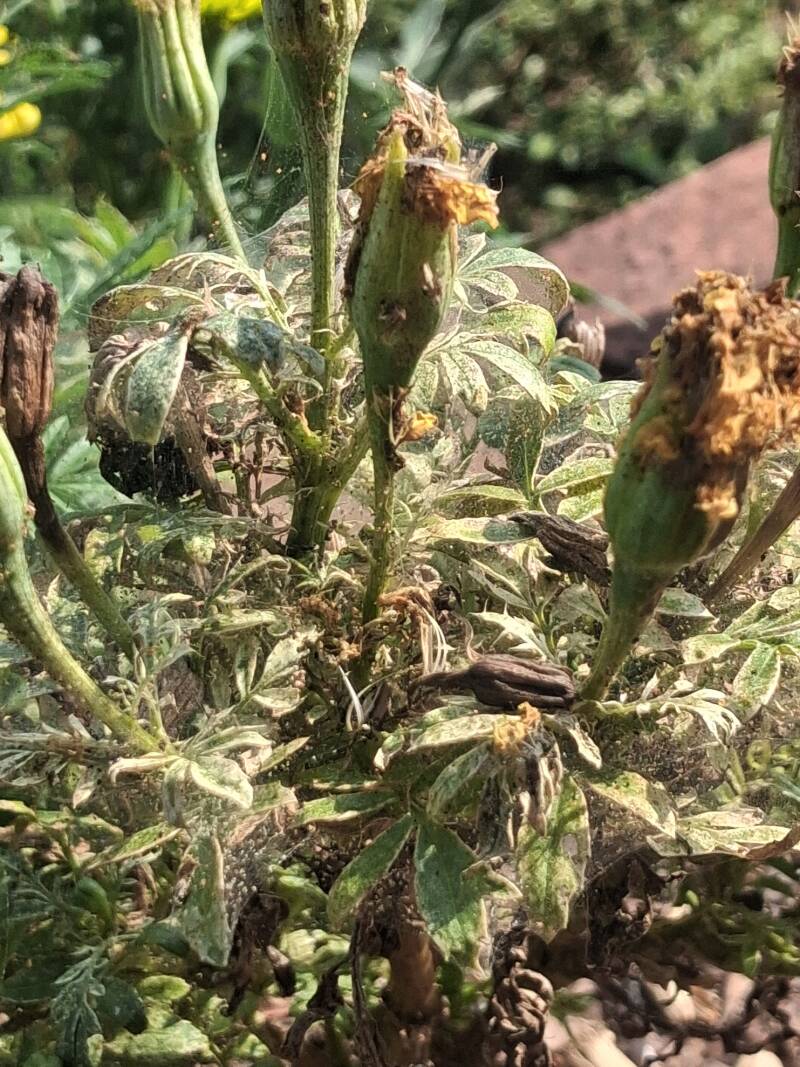
They thrive during hot, dry conditions and can quickly move from a few damaged leaves to an entire plant. If you've noticed tiny pale spots on your leaves, yellowing foliage, fine webbing, or a plant that seems to be declining for no obvious reason, spider mites may be the culprit.
The good news? You don't always need a harsh pesticide to get them under control.
There are several lower-impact approaches you can try, from a strong spray of water to insecticidal soap, horticultural oil and neem-based products.
First, Make Sure You Actually Have Spider Mites
Before treating your plant, take a close look.
Spider mites are extremely small and can be difficult to see without a magnifying glass. They commonly live on the undersides of leaves, where they feed on plant juices.
Common signs include:
- Tiny yellow, white or bronze-colored speckles on leaves
- Leaves that look faded or stippled
- Yellowing or browning foliage
- Premature leaf drop
- Fine webbing, especially during heavier infestations
- Overall plant decline
A simple test is to hold a piece of white paper underneath a leaf and gently tap the foliage. Very tiny moving dots may indicate mites.
Spider mites are especially common when plants are experiencing heat and drought stress, so keeping plants adequately watered is one of the best preventative measures.
1. Start With Water
Before reaching for a spray, try something surprisingly simple:
Water.
Use a firm stream of water to thoroughly rinse the plant, paying particular attention to the undersides of the leaves.
This can physically knock spider mites and their webbing off the plant.
It is one of the easiest first steps because it doesn't introduce another pesticide into your garden.
How to do it
- Use a hose with a firm but not damaging spray.
- Spray the tops and undersides of the leaves.
- Pay particular attention to new growth.
- Repeat every few days while monitoring the plant.
This works best when you catch an infestation early.
2. Insecticidal Soap
If water alone isn't enough, insecticidal soap is one of the most useful low-impact options.
Look for a product specifically labeled insecticidal soap rather than making your own concentrated dish-soap mixture.
That's an important distinction.
Homemade soap solutions can contain ingredients that damage plant tissue. Commercial insecticidal soaps are formulated specifically for use on plants.
How it works
Insecticidal soap works when it comes into direct contact with the mites. It doesn't provide long-lasting residual protection, so repeat applications may be necessary.
Thorough coverage is particularly important because spider mites often hide on the undersides of leaves.
Always follow the product label for dilution, application and frequency.
3. Horticultural Oil
Horticultural oil is another effective option for spider mites.
These oils work primarily through direct contact, so good coverage is essential.
Spray both:
- The tops of leaves
- The undersides of leaves
- Stems and other areas where mites may be hiding
Repeat treatments may be necessary because eggs and mites can survive an initial application.
Horticultural oils can be relatively gentle on beneficial insects compared with many broad-spectrum pesticides when used correctly.
A word of caution
Don't assume that because something is "natural" it can't damage plants.
Oils can cause leaf burn under certain conditions, particularly when plants are stressed or temperatures are high.
Read the label and test a small area of the plant first.
4. Neem Oil
Neem oil is another popular option for gardeners looking for a plant-based pest control product.
Neem products can affect certain pests through feeding and growth-disruption effects, but neem isn't a magic cure for every garden pest.
For spider mites, coverage is especially important, and repeated applications may be necessary.
If you choose neem:
- Follow the product label carefully.
- Spray the undersides of leaves.
- Avoid spraying during the hottest part of the day.
- Test the product on a small section of the plant first.
- Avoid spraying flowers that are actively being visited by pollinators.
- Reapply according to the label if mites persist.
Remember: "natural" does not automatically mean harmless to plants or beneficial insects.
5. Try a Rhubarb-Leaf Spray? Read This First.
You've probably seen the homemade rhubarb leaf pesticide recipe online.
The traditional recipe involves simmering chopped rhubarb leaves in water, allowing the mixture to cool, straining it and adding a small amount of soap before spraying plants.
Rhubarb leaves contain oxalic acid and other compounds that make them poisonous if eaten.
The commonly shared recipe
If you encounter this traditional recipe, it is generally described as:
- About 500 grams (roughly three medium leaves) of chopped rhubarb leaves
- A few pints to a gallon of water
- Simmer for approximately 20–30 minutes
- Allow the mixture to cool completely
- Strain thoroughly
- Add a very small amount of liquid soap
However, we don't recommend treating this as a proven or preferred spider-mite treatment.
Health Canada specifically warns about homemade pesticides made by boiling rhubarb leaves because the process is intended to extract toxic compounds.
If you choose to experiment with traditional homemade remedies, keep the following in mind:
- Never consume the mixture.
- Keep it away from children and pets.
- Don't use cookware or utensils that will later be used for food.
- Label the container clearly.
- Don't spray edible crops.
- Test any homemade spray on a small section of the plant first.
- Never assume a homemade pesticide is safer simply because it is made from a plant.
For most gardeners, insecticidal soap or a properly labeled horticultural oil is the more predictable choice.
6. Encourage Spider Mite Predators
Not every tiny creature in your garden is a pest.
Some are actually working for you.
Spider mites have natural enemies, including predatory mites and certain species of predatory lady beetles. These beneficial organisms can help keep spider mite populations under control.
This is one reason we don't recommend immediately reaching for a broad-spectrum insecticide.
Some pesticides can kill the natural enemies that normally keep spider mites in check. In some situations, that can actually make a spider-mite problem worse.
A healthy garden isn't necessarily a garden without insects.
It's a garden with more of the good ones doing their jobs.
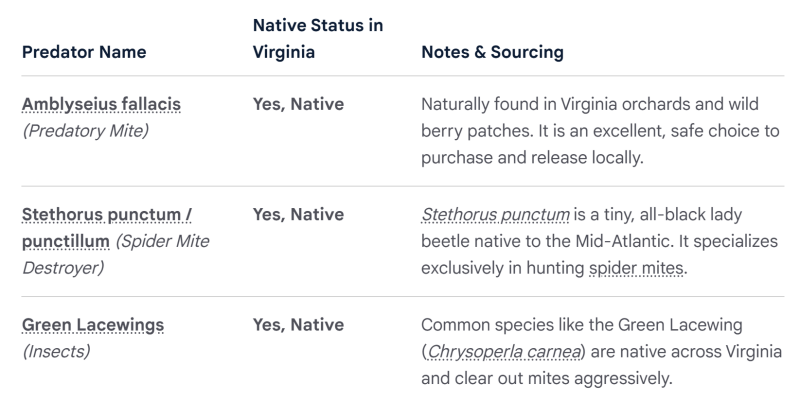
Recommendation: For an outdoor plant in Norfolk's humid climate, releasing the native predatory mite Amblyseius fallacis or the native Stethorus punctillum will provide excellent control without introducing non-native species to your yard.
7. Give Stressed Plants Some Extra Attention
Spider mites love stressed plants.
Hot weather, drought and dry conditions can create exactly the environment they prefer.
That makes plant care part of spider-mite prevention.
Help your plants by:
- Watering deeply when needed
- Mulching to help retain soil moisture
- Avoiding unnecessary plant stress
- Choosing plants suited to the conditions in your garden
- Checking plants regularly during hot, dry weather
- Avoiding excessive fertilizer during drought conditions
For established landscape plants, focus on maintaining healthy soil and appropriate watering rather than constantly treating pests.
What About Dish Soap?
This is one of the most common pieces of gardening advice you'll find online:
"Just mix dish soap and water."
Be careful.
Dish soaps and detergents aren't formulated to be used as pesticides on plants. Concentrations can vary considerably, and some can damage or burn foliage.
For spider mites, we recommend using a commercial insecticidal soap labeled for mite control rather than improvising a strong dish-soap mixture.
If a recipe calls for "a few drops of dish soap," that doesn't necessarily mean it's safe for every plant.
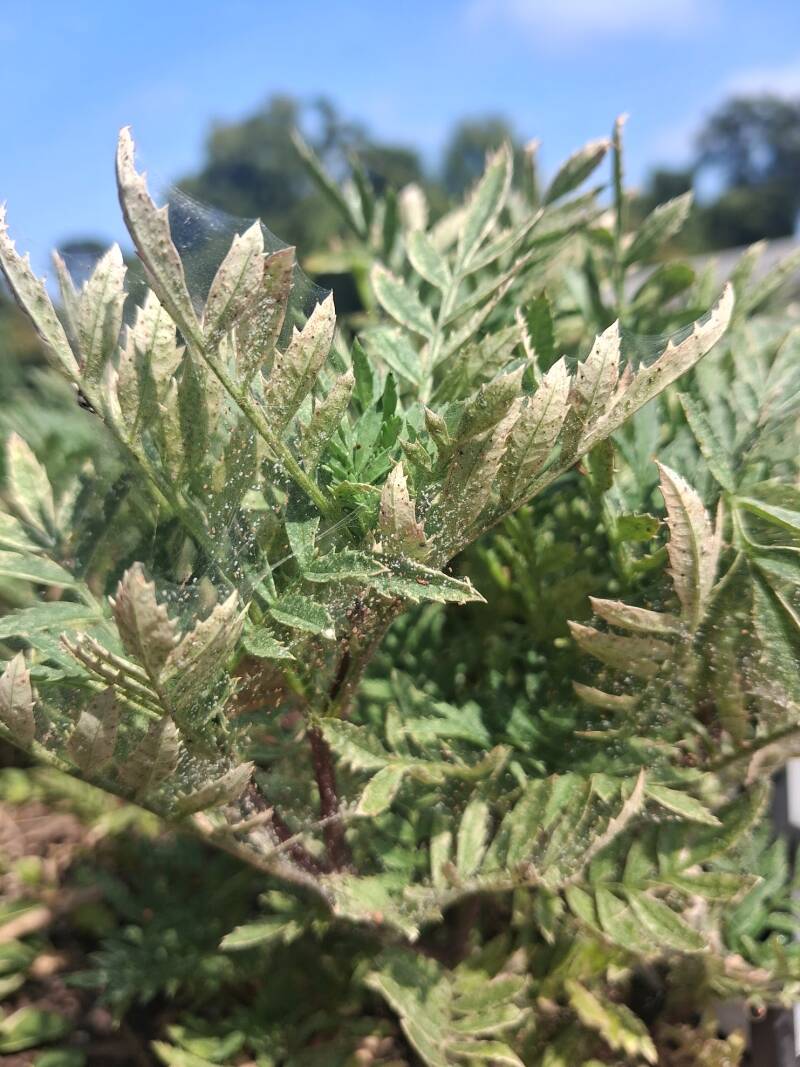
A Simple Spider-Mite Action Plan
If you discover spider mites on one of your plants, don't panic.
Try this progression:
Step 1: Isolate the plant
If it's a houseplant, move it away from your other plants so the mites don't spread.
Step 2: Rinse the foliage
Use a firm stream of water to wash the leaves, especially the undersides.
Step 3: Remove badly damaged leaves
If leaves are heavily damaged or covered in webbing, removing them can reduce the number of mites you're dealing with.
Step 4: Choose a treatment
Consider:
- Insecticidal soap
- Horticultural oil
- A properly labeled neem product
Follow the product label carefully.
Step 5: Repeat and monitor
Spider mites can reproduce quickly, so one treatment may not be enough.
Check your plant every few days and watch the newest growth for signs of continued infestation.
Don't Forget the Undersides of the Leaves
This may be the most important tip in the entire article.
Look underneath the leaves.
Spider mites often hide there, which means spraying only the tops of your leaves may leave much of the infestation untouched.
Whether you're using water, insecticidal soap or horticultural oil, thorough coverage is essential.
Prevention Is Easier Than a Major Infestation
You don't have to wait until your plants are covered in webbing.
During hot, dry stretches of weather, make a habit of checking your plants every few days.
Look underneath leaves.
Check new growth.
Watch for stippling and discoloration.
And pay attention to plants that are already showing signs of drought stress.
A few minutes of observation can help you catch a spider-mite problem before it becomes a much bigger one.
Root & Bloom Tip 🌱
When it comes to garden pests, our goal isn't to eliminate every insect we see.
It's to create a healthier garden where plants, pollinators and beneficial insects can coexist.
Start with the least disruptive option that works: water first, then consider targeted products such as insecticidal soap or horticultural oil when needed.
And remember—a little pest pressure isn't always a bad thing. Sometimes it's simply part of a healthy garden ecosystem.
Sources & Further Reading
The University of Minnesota Extension recommends physical removal with water, insecticidal soap and horticultural oils as important tools for managing spider mites, while also emphasizing plant health and natural predators.
Penn State Extension notes that rhubarb leaves contain toxic levels of oxalic acid and should not be eaten.
Health Canada cautions against homemade pesticides made by boiling plants such as rhubarb because the process can extract toxic compounds.