Create a garden that feeds pollinators from spring through fall
There is something special about watching a Ruby-throated Hummingbird hover over a flower or seeing a monarch butterfly drift through a Norfolk garden.
The good news is that you don't need a huge property—or a perfectly manicured landscape—to help them.
By planting native flowers that provide nectar throughout the growing season, you can turn your yard into a small but meaningful source of food and habitat for hummingbirds, monarchs, bees, butterflies and other pollinators.
For Norfolk gardeners, choosing plants that are native to Southeast Virginia is especially important. Norfolk is part of the Southeast Virginia region recognized by the Virginia Native Plant Society, along with Chesapeake, Virginia Beach, Hampton, Portsmouth and surrounding communities.
And when you plant for monarchs, remember one important distinction:
Nectar plants feed adult monarchs. Milkweed feeds monarch caterpillars.
A successful pollinator garden can provide both.
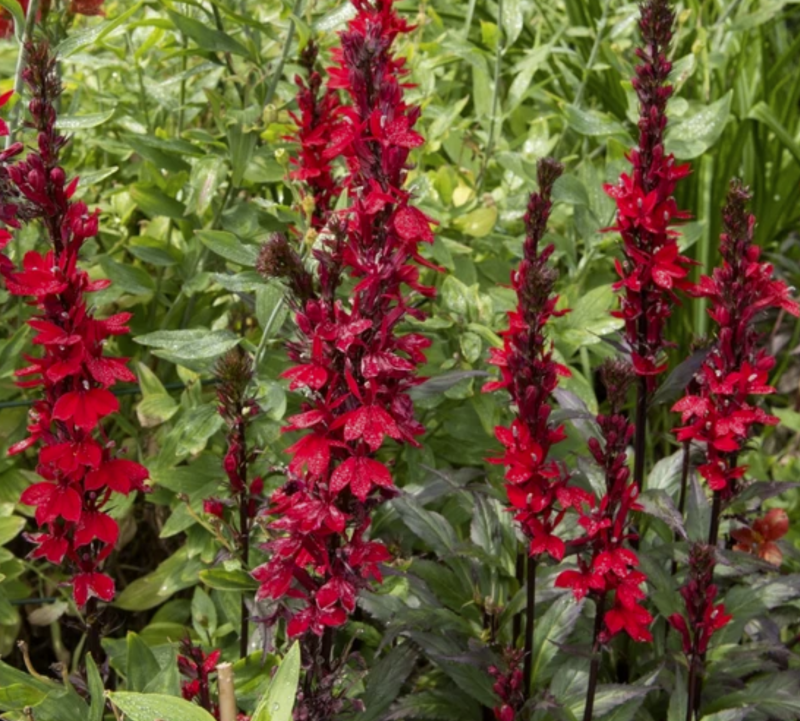
🌿1. Cardinal Flower
Lobelia cardinalis
If hummingbirds are your priority, cardinal flower is a beautiful place to start.
Its brilliant red, tubular flowers are especially attractive to hummingbirds. The flowers rise above the foliage in summer, creating a dramatic splash of color in a native garden.
Cardinal flower is a long-recognized Virginia native; the Virginia Native Plant Society selected it as its 1991 Wildflower of the Year.
Best for: Hummingbirds and other pollinators
Bloom time: Summer into early fall
Light: Part sun to part shade
Soil: Moist to wet
Norfolk garden tip
Cardinal flower is particularly useful in wetter parts of the landscape. Consider planting it near a rain garden, drainage area, pond edge or other location that stays consistently moist.
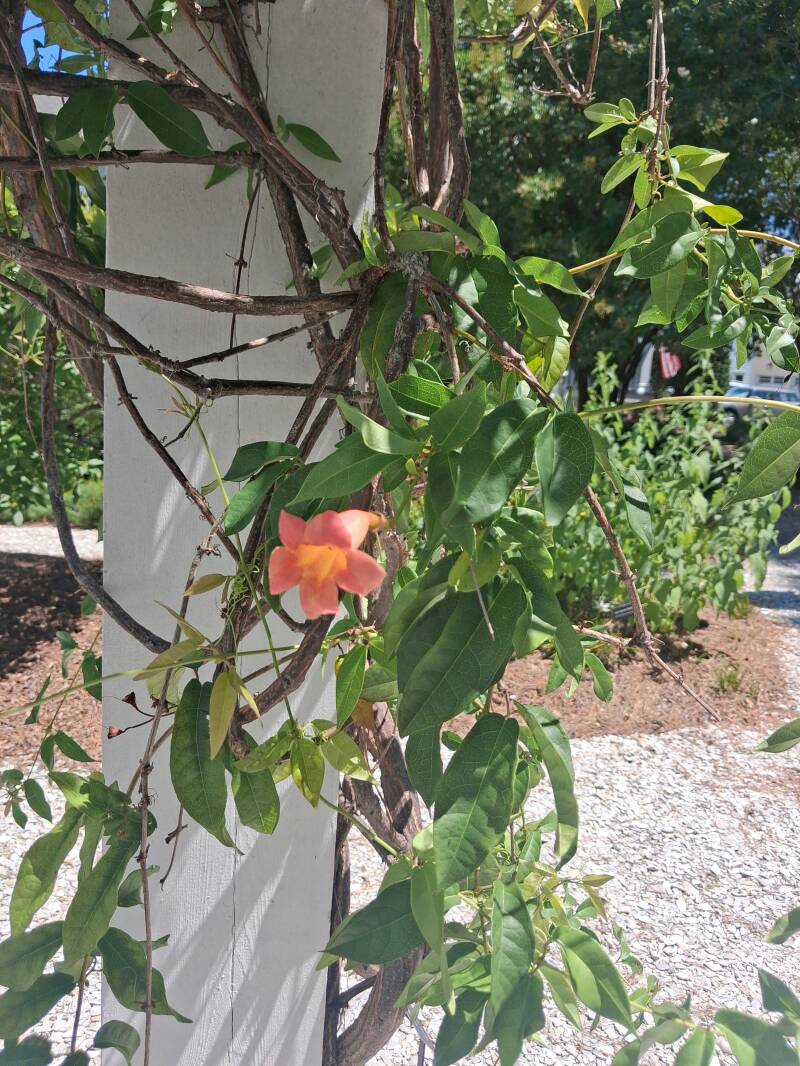
🌿 2. Coral Honeysuckle
Lonicera sempervirens
Want to bring hummingbirds to a fence or trellis?
Plant coral honeysuckle.
This native vine produces bright red, tubular flowers filled with nectar that are especially suited to hummingbird pollination. The Virginia Native Plant Society notes that its flowers attract both butterflies and hummingbirds.
Coral honeysuckle is also a wonderful example of why choosing the right kind of honeysuckle matters. Unlike invasive Japanese honeysuckle, coral honeysuckle is native to Virginia.
Best for: Hummingbirds, butterflies and other pollinators
Bloom time: Spring, with additional flowering possible later
Light: Full sun to part shade
Growth: Climbing vine
Norfolk garden tip
Give coral honeysuckle a sturdy trellis, fence, arbor or other support. Full sun will generally provide the best flowering.
It can also tolerate clay soil, making it a practical choice for many Norfolk yards.
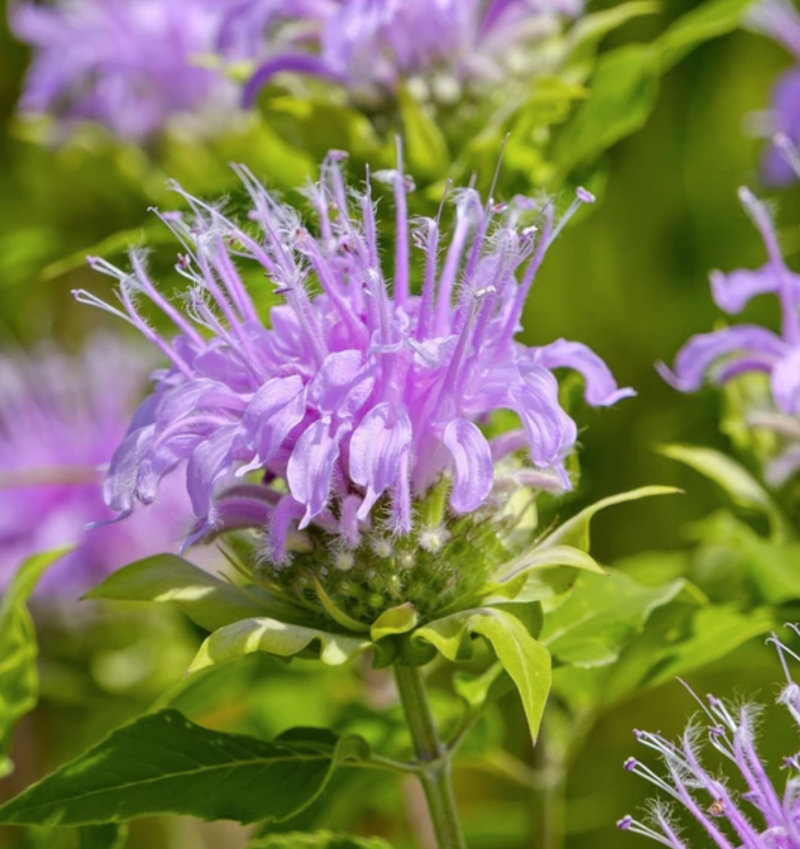
🌿 3. Wild Bergamot
Monarda fistulosa
Wild bergamot is a beautiful native alternative to the commonly planted garden bee balms that may come from other regions.
Its lavender-pink flowers rise above upright stems and attract a variety of pollinators, including bees and butterflies. Hummingbirds may also visit the tubular flowers.
The Virginia Native Plant Society selected wild bergamot as its 1993 Wildflower of the Year, recognizing it as a Virginia native.
Best for: Hummingbirds, bees and butterflies
Bloom time: Summer
Light: Full sun to part shade
Soil: Average to well-drained
Norfolk garden tip
Plant wild bergamot where it has good air circulation and room to spread. A group of plants can create a much more impressive nectar source than a single specimen.
🌿 4. Swamp Milkweed
Asclepias incarnata
If you're planting specifically for monarchs, make room for milkweed.
Swamp milkweed is both a nectar-producing flowering plant and an important host plant for monarch caterpillars.
Adult monarchs visit the flowers for nectar, while monarch females use milkweed as a place to lay their eggs. Once the caterpillars hatch, they feed on the leaves.
That makes milkweed fundamentally different from a plant that simply provides nectar.
Best for: Monarchs, butterflies and other pollinators
Bloom time: Summer
Light: Full sun
Soil: Moist to wet
Norfolk garden tip
Swamp milkweed is especially well suited to wetter areas of the yard. It can be a great addition to a Norfolk rain garden or another area that periodically holds moisture.
And if you see leaves being eaten?
Don't panic.
Those chewed leaves may mean you've successfully created habitat for monarch caterpillars.
🌿 5. Butterfly Weed
Asclepias tuberosa
Butterfly weed brings brilliant orange flowers to the summer garden—and it does much more than look pretty.
Like swamp milkweed, butterfly weed serves as a host plant for monarch caterpillars while also providing nectar to adult butterflies and other pollinators.
The Virginia Native Plant Society selected butterfly weed as its 1992 Wildflower of the Year.
Best for: Monarchs, butterflies and bees
Bloom time: Summer
Light: Full sun
Soil: Well-drained
Norfolk garden tip
Unlike swamp milkweed, butterfly weed prefers better-drained conditions.
Try it in a sunny garden bed, rather than the wettest portion of your rain garden.
🌿6. Hollow Joe-Pye Weed
Eutrochium fistulosum
If you have room for a taller plant, hollow Joe-Pye weed is a pollinator powerhouse.
Its tall stems are topped with large clusters of pinkish-purple flowers that can attract butterflies, bees, hummingbirds and other nectar-seeking insects.
The Virginia Native Plant Society selected hollow Joe-Pye weed as its 2023 Wildflower of the Year. VNPS notes that the species occurs naturally throughout nearly every county in Virginia and attracts a diverse range of pollinators.
Best for: Monarchs, butterflies, bees and hummingbirds
Bloom time: Summer into early fall
Light: Full sun to part shade
Soil: Moist
Norfolk garden tip
This is a great plant for the back of a naturalistic planting bed or a rain garden.
It can get tall, so give it plenty of space rather than trying to keep it squeezed between shorter plants.
🌿 7. Seaside Goldenrod
Solidago sempervirens
Goldenrod is one of the most valuable late-season nectar plants, and for a Norfolk garden, seaside goldenrod is an especially appropriate choice.
Its bright yellow flowers provide nectar late in the growing season, when many spring and summer flowers are beginning to fade.
That late-season timing is important for migrating butterflies and other pollinators that still need food.
Best for: Monarchs, butterflies, bees and other late-season pollinators
Bloom time: Late summer through fall
Light: Full sun
Soil: Average to well-drained
Norfolk garden tip
Seaside goldenrod is particularly well suited to Hampton Roads' coastal character. Consider it for sunny native beds where you want a strong late-season burst of yellow.
🌿 8. Narrow-Leaved Sunflower
Helianthus angustifolius
Looking for a plant that keeps the pollinator garden going into fall?
Narrow-leaved sunflower is an excellent choice.
Its cheerful yellow flowers provide nectar late in the season and bring plenty of activity to the garden when many other plants have finished blooming.
Best for: Butterflies, bees and other pollinators
Bloom time: Late summer through fall
Light: Full sun
Soil: Moist to average
Norfolk garden tip
Plant several together rather than scattering individual plants throughout the yard.
A larger grouping creates a more substantial nectar source and makes an eye-catching fall display.
🌿 9. New York Aster
Symphyotrichum novi-belgii
Asters are another important piece of a late-season pollinator garden.
New York aster produces purple flowers that can provide nectar late in the growing season, helping pollinators find food after many spring and summer plants have finished flowering.
The Virginia Native Plant Society also recognizes asters as valuable native components of pollinator plantings.
Best for: Monarchs, butterflies, bees and other pollinators
Bloom time: Late summer through fall
Light: Full sun to part shade
Soil: Moist to average
Norfolk garden tip
Pair asters with seaside goldenrod.
The purple-and-gold combination is beautiful, but more importantly, the two plants can help extend the availability of nectar late into the season.
🌿 Why Monarchs Need More Than Flowers
A butterfly garden isn't just about attracting adult butterflies.
It's about supporting the entire life cycle.
For monarchs, milkweed is essential because it serves as the host plant for monarch caterpillars.
That's why planting swamp milkweed and butterfly weed alongside nectar-producing flowers is so important.
Think of it this way:
🌸 Nectar plants
Provide food for adult butterflies, hummingbirds, bees and other pollinators.
🌿 Milkweed
Provides food and habitat for monarch caterpillars.
🐛 Caterpillars
Need leaves—and that means a healthy pollinator garden may not always look perfectly pristine.
🦋 Adult butterflies
Need nectar throughout the season, especially during migration.
A few holes in your leaves aren't necessarily a problem.
They may be evidence that your garden is working.
🌿 Build a Norfolk Pollinator Garden With Layers
You don't need all nine plants to make a difference.
Instead, think about creating layers and succession.
For hummingbirds
Start with:
- Cardinal flower
- Coral honeysuckle
- Wild bergamot
- Hollow Joe-Pye weed
For monarchs
Include:
- Swamp milkweed
- Butterfly weed
- Seaside goldenrod
- Narrow-leaved sunflower
- New York aster
For a wetter Norfolk yard
Consider:
- Cardinal flower
- Swamp milkweed
- Hollow Joe-Pye weed
For a sunnier, drier garden bed
Consider:
- Butterfly weed
- Wild bergamot
- Seaside goldenrod
- Narrow-leaved sunflower
- New York aster
The key is to match the plant to the conditions you actually have.
Right plant. Right place. More habitat.
🌿 Skip the Perfect Garden
A native pollinator garden isn't supposed to look like a showroom.
It should have flowers, leaves, seed heads, insects, caterpillars and the occasional chewed leaf.
Those little imperfections are signs of life.
And that's exactly what we're trying to create.
Instead of asking, "How do I keep every leaf perfect?"
Try asking:
"What can I plant here that gives something back?"
A flower can provide nectar.
A milkweed leaf can feed a caterpillar.
A native vine can give a hummingbird somewhere to feed.
A group of fall flowers can give a migrating monarch the energy it needs for the next part of its journey.
And one Norfolk yard can become a tiny piece of a much larger network of habitat.
🌿 Start With One Plant
You don't have to transform your entire yard overnight.
Start with one milkweed.
Add a cardinal flower.
Give coral honeysuckle a place to climb.
Plant a patch of wild bergamot.
Add late-season goldenrod and asters.
Over time, your garden becomes more than a collection of plants.
It becomes habitat.
And when enough Norfolk homeowners do the same thing, those individual gardens begin to connect—creating a network of small spaces where pollinators can feed, rest and reproduce.
That's the beauty of native gardening.
One yard can make a difference.
And together, we can keep growing native, one yard at a time.
Root & Bloom Norfolk
Growing native, one yard at a time.