

You don't have a black thumb, you just have clay soil.
If you've ever tried to dig a garden bed in Norfolk, you already know: clay soil can be tough.
It can be heavy and compacted, hold water after a storm, and become surprisingly hard when it dries out. But having clay soil doesn't mean you have to give up on a beautiful garden.
The key is to work with your soil instead of constantly fighting it.
Choosing plants that are naturally adapted to the conditions found in Southeast Virginia can make establishing a garden much easier. The City of Norfolk's Native Plants for Southeast Virginia, including Hampton Roads guide is a great local resource for choosing plants based on sunlight, moisture and soil conditions.
Here are 10 native plants worth considering if you're gardening in Norfolk or the surrounding Hampton Roads region and dealing with clay soil.
1. Virginia Sweetspire
Itea virginica
Best for: Moist clay, part shade to sun, rain gardens and foundation beds
Virginia Sweetspire is one of our favorite choices for a Hampton Roads landscape.
This native shrub produces fragrant white flowers in late spring and early summer, followed by beautiful red-to-purple fall foliage. It can tolerate a surprisingly wide range of conditions, including medium to wet clay soils.
The City of Norfolk's native plant guide specifically notes that Virginia Sweetspire can grow in swamps and other areas with poor drainage.
Why plant it?
- Native to Southeast Virginia
- Tolerates clay
- Handles wet areas
- Attractive flowers
- Excellent fall color
- Provides habitat for wildlife
If you have a low spot in your yard where water tends to linger, Virginia Sweetspire is a plant worth considering.
2. Wild Hydrangea
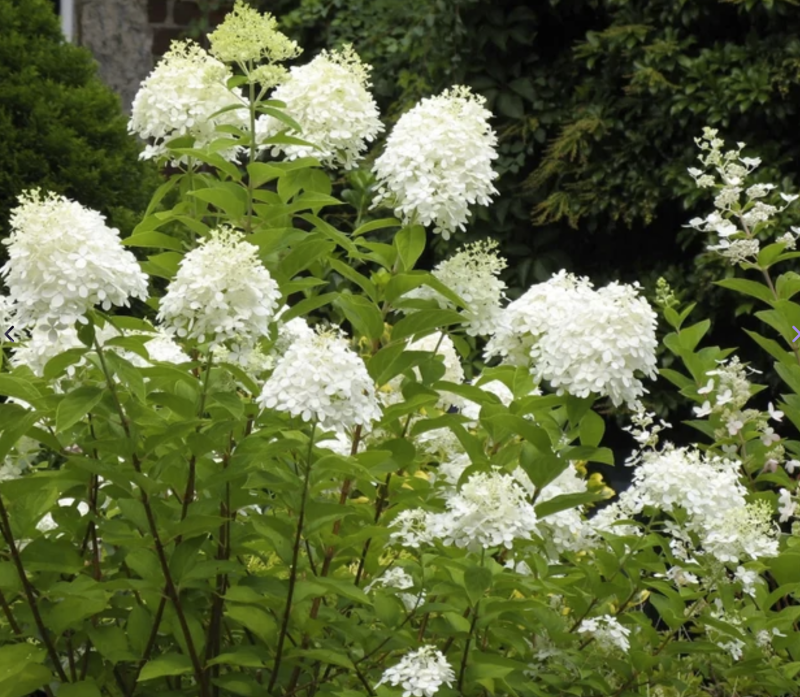
Hydrangea arborescens
Best for: Moist clay, part shade and woodland-edge gardens
If you love the look of flowering shrubs, Wild Hydrangea can bring a more traditional garden feel to a native landscape.
It produces clusters of white flowers in early summer and can be especially useful in areas where drainage isn't perfect.
The City of Norfolk guide lists Wild Hydrangea for moist clay soils and notes that it can grow in areas of poor drainage.
Wild Hydrangea can spread by suckering, so give it room to grow when planning your garden.
Why plant it?
- Native to the Hampton Roads region
- Handles clay
- Tolerates poor drainage
- Beautiful white flowers
- Works well in mass plantings
- Provides habitat value
3. Swamp Milkweed
Asclepias incarnata
Best for: Moist clay, rain gardens and pollinator gardens
If you're looking for a native plant that does double duty for both your garden and wildlife, put Swamp Milkweed on your list.
Despite its name, Swamp Milkweed doesn't require an actual swamp. It simply performs particularly well in areas with more moisture.
It's also an important host plant for monarch butterfly caterpillars.
The City of Norfolk includes Swamp Milkweed among its recommended native perennials for Southeast Virginia.
Why plant it?
- Native to Southeast Virginia
- Excellent pollinator plant
- Monarch host plant
- Well suited to moist areas
- Beautiful pink flowers
- Great choice for rain gardens
For a Norfolk yard that stays wet after heavy rainfall, this can be a much better strategy than trying to force a dry-soil plant to survive there.
4. Narrow-Leaved Sunflower
Helianthus angustifolius
Best for: Full sun, clay and moist areas
Want some serious fall color?
Narrow-Leaved Sunflower produces cheerful yellow flowers later in the growing season and can bring a burst of color to areas where many summer flowers are beginning to fade.
It's particularly useful for Hampton Roads gardeners because it can tolerate clay and moist conditions.
Why plant it?
- Native to the region
- Tolerates clay
- Handles moisture
- Provides late-season flowers
- Supports pollinators
- Adds height and movement to a garden
Plant it where you have room for it to spread and where a more naturalistic appearance is welcome.
5. Cardinal Flower
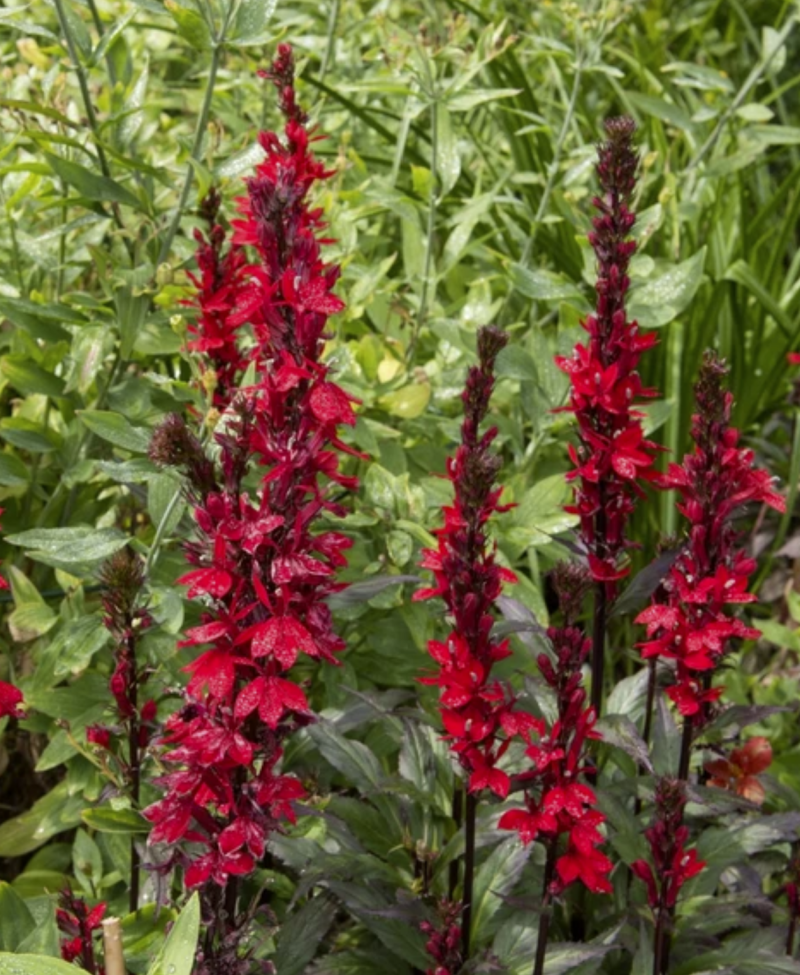
Lobelia cardinalis
Best for: Moist to wet clay, part shade and rain gardens
Cardinal Flower is one of those native plants that makes you stop and look.
Its intense red flowers are hard to miss, especially when planted against green foliage.
It also has a special relationship with hummingbirds, whose long bills are well suited to the plant's tubular flowers.
For Norfolk gardeners dealing with wet clay, Cardinal Flower can be an especially useful choice.
Why plant it?
- Native to the region
- Excellent for wet areas
- Works in clay
- Attracts hummingbirds
- Beautiful red flowers
- Great addition to rain gardens
If you have a shady or partly shaded area that stays damp, this is one to remember.
6. Grass-Leaved Blazing Star
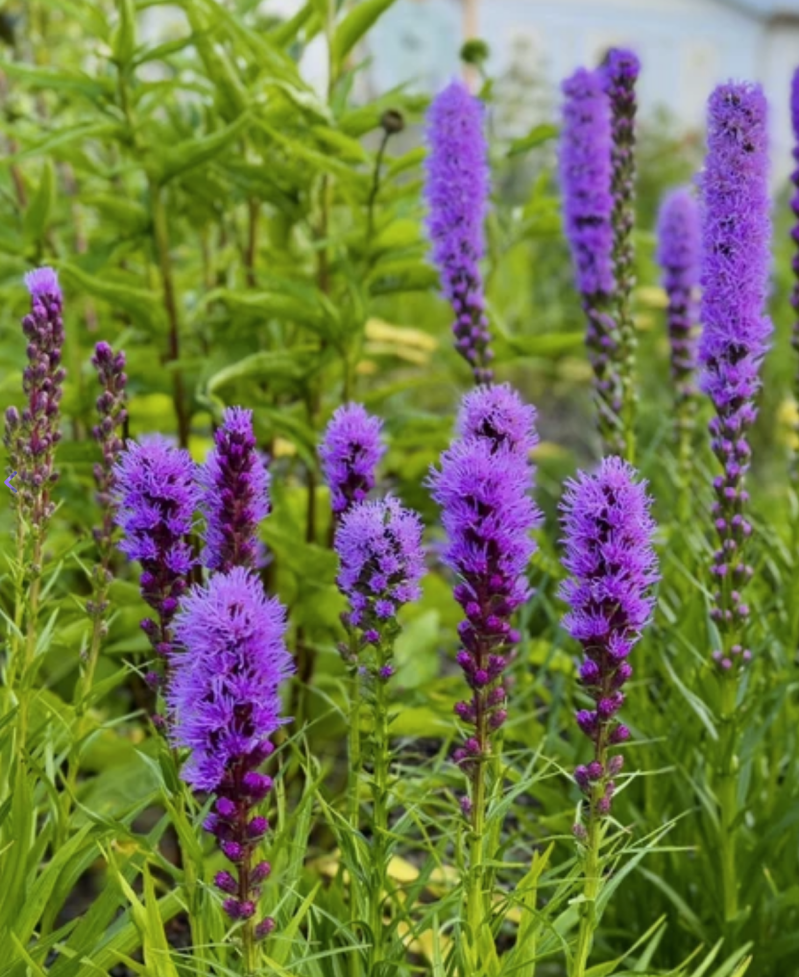
Liatris pilosa
Best for: Sunny clay, pollinator gardens and rain gardens
Grass-Leaved Blazing Star brings vertical interest to a garden with spikes of purple flowers.
Unlike some plants that prefer extremely well-drained soil, this native can be used in clay conditions and is also listed by the City of Norfolk as an option for rain gardens.
That makes it particularly interesting for homeowners looking for plants that combine beauty with stormwater benefits.
Why plant it?
- Native to Southeast Virginia
- Tolerates clay
- Excellent pollinator plant
- Adds vertical structure
- Purple flowers provide strong garden color
- Suitable for rain-garden applications
Plant it among lower-growing perennials to create layers rather than one flat planting bed.
7. Switchgrass
Panicum virgatum
Best for: Full sun, clay and areas that fluctuate between wet and dry
Native grasses can be incredibly useful in a Hampton Roads landscape.
Switchgrass forms upright clumps that provide structure during the growing season and continue to add interest into fall and winter.
It's also useful when you want a native planting that looks intentional and landscaped, rather than overly wild.
Why plant it?
- Native grass
- Adaptable
- Useful in clay soils
- Provides garden structure
- Offers habitat and seeds for wildlife
- Provides winter interest
Try planting several together rather than scattering individual plants throughout the garden.
8. Winterberry
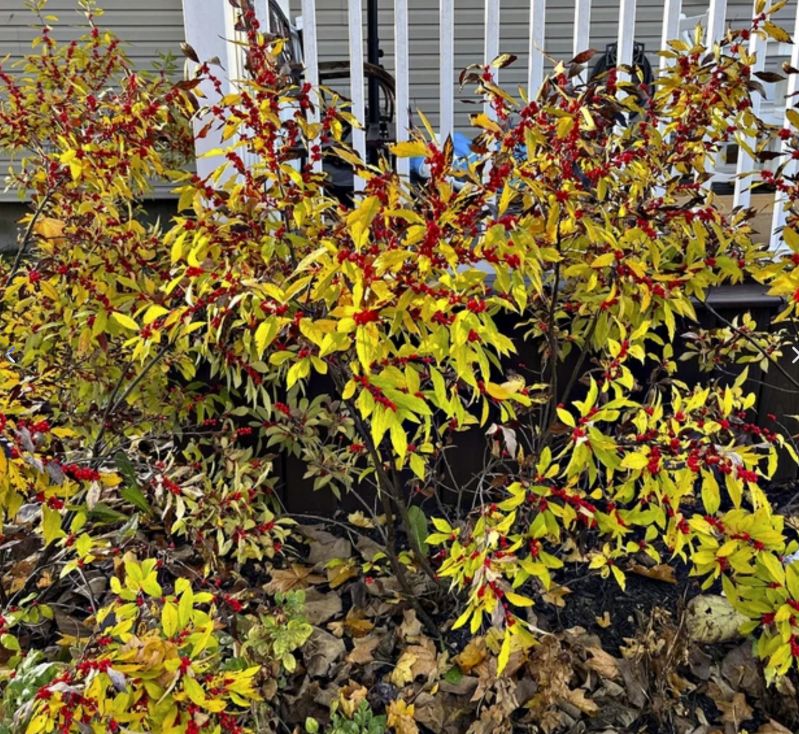
Ilex verticillata
Best for: Moist clay, part shade and wildlife gardens
Winterberry is a deciduous native holly that can bring something especially valuable to the winter landscape: bright red berries.
Unlike evergreen hollies, Winterberry loses its leaves in fall, leaving the colorful berries exposed.
The City of Norfolk guide lists Winterberry as tolerant of average, acidic, dry to wet soils and clay.
One important detail: Winterberry plants are male or female. You'll need a compatible male plant nearby for the female plant to produce berries.
Why plant it?
- Native to the region
- Tolerates clay
- Handles wet conditions
- Provides winter interest
- Berries provide food for birds
- Attractive fall color
This is a great option when you want a native landscape to look interesting beyond the summer growing season.
9. Inkberry
Ilex glabra
Best for: Moist clay, part shade and evergreen structure
If you want an evergreen native shrub, Inkberry is worth considering.
Inkberry is a native holly with glossy green foliage that can provide year-round structure in the landscape.
The Norfolk guide lists it for wet to moist soils and notes that it is flood tolerant.
It can work particularly well as a foundation planting, informal hedge or background plant in a native garden.
Why plant it?
- Native evergreen
- Provides year-round structure
- Handles wet conditions
- Flood tolerant
- Supports wildlife
- Useful as a hedge or mass planting
It's a good reminder that a native garden doesn't have to look like a meadow. Native shrubs can give your landscape the structure many homeowners want.
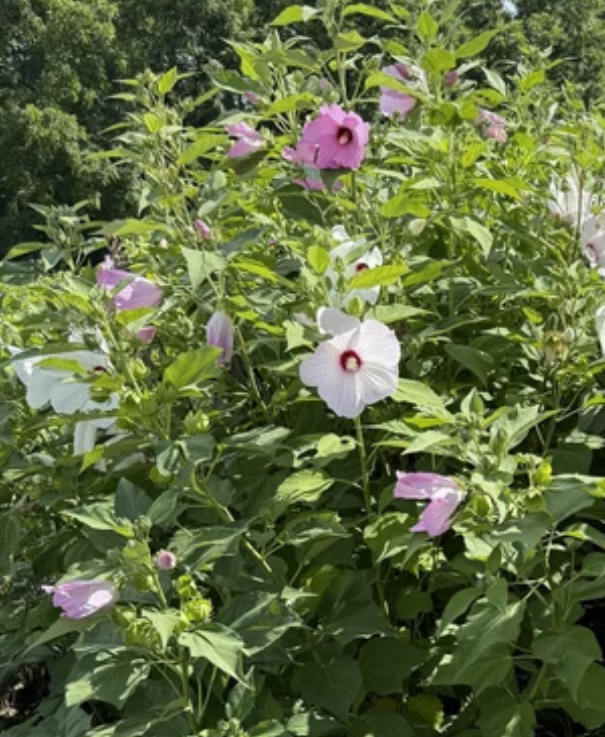
10. Swamp Rose Mallow
Hibiscus moscheutos
Best for: Moist clay, full sun and rain gardens
If you want a plant that makes a statement, Swamp Rose Mallow deserves a spot on the list.
This native perennial produces large, showy flowers and thrives in moist conditions.
It's especially useful for the wetter portions of a yard where conventional landscape plants may struggle.
The City of Norfolk includes Swamp Rose Mallow among its recommended native plants for Southeast Virginia.
Why plant it?
- Native to the region
- Loves moist conditions
- Works well in clay
- Large, showy flowers
- Excellent focal plant
- Great for rain gardens and wet areas
Give it plenty of room and sunshine, and let it become the star of the planting bed.
Don't Fight Your Clay Soil — Design Around It
One of the biggest mistakes gardeners make with clay soil is assuming that they need to completely change the soil before they can grow anything.
That's not always necessary.
Before planting, take a look at how your soil actually behaves.
Does it stay wet after a storm?
Does water drain away within a day?
Does it become hard and compacted during dry weather?
Is the area in full sun or afternoon shade?
Those answers can help you choose plants that are naturally suited to the site.
Virginia Cooperative Extension recommends evaluating soil type, drainage, moisture and compaction before choosing plants. If soil is compacted, loosening the planting area can help roots establish.
And there's an important distinction between clay soil and compacted clay fill.
Native plants can tolerate clay, but extremely compacted soil can make it difficult for roots, air and water to move. If your soil is heavily compacted, improving the planting area may be more helpful than simply adding more soil to the planting hole.
What About Clay Soil That Floods?
This is where native plants can become especially useful for Hampton Roads homeowners.
If part of your yard naturally collects water, don't necessarily try to make it behave like a dry garden.
Instead, consider creating a rain garden or moisture-loving native planting area.
Plants adapted to wet conditions can help intercept rainfall through their leaves and roots while creating habitat for pollinators and other wildlife.
The City of Norfolk notes that native plants used in rain gardens and bioretention areas can help absorb runoff and nutrients and filter pollutants before water reaches waterways.
That makes plant selection more than just a gardening decision. It can also be part of a neighborhood-scale approach to managing stormwater.
Clay Soil Doesn't Have to Be Your Enemy
When gardeners encounter heavy clay, the first instinct is often to start changing the soil.
Sometimes that is necessary, particularly when soil has become severely compacted. But another approach is to ask:
"What wants to grow here?"
That's an important shift.
Instead of choosing a plant because you love how it looks and then trying to make your yard fit the plant, choose a plant that already likes the conditions your yard provides.
Have a wet, sunny spot?
Try Swamp Milkweed, Narrow-Leaved Sunflower or Swamp Rose Mallow.
Have a damp, partly shaded area?
Consider Virginia Sweetspire, Wild Hydrangea or Cardinal Flower.
Want an evergreen shrub?
Inkberry can provide year-round structure.
Want winter berries?
Winterberry can bring color and food for birds.
Before You Plant: Know Your Yard
The best native garden isn't necessarily the one with the most plants.
It's the one where the right plants are matched to the right place.
Before purchasing anything, take a few minutes to observe your yard:
☀️ Sun: How many hours of direct sunlight does the area receive?
💧 Water: Does water drain quickly or stay after rainfall?
🌱 Soil: Is it sandy, loamy, clay-heavy or compacted?
🏡 Space: How large will the plant become at maturity?
🦋 Wildlife: What do you want your garden to support — butterflies, bees, birds or all three?
Norfolk's native plant guidance emphasizes matching plants to the existing conditions of the site, including soil type, moisture and sunlight.
And when possible, look for locally sourced native plants or local ecotypes. Virginia Cooperative Extension notes that plants sourced from within roughly 100–200 miles of the planting site are more likely to establish successfully and help conserve local genetics.
The Bottom Line
Clay soil doesn't mean you need a boring yard.
In fact, some of the best native plants for Hampton Roads are perfectly comfortable with the heavy, moist conditions that can make gardening here challenging.
The trick is to stop asking:
"How do I make my soil perfect?"
and start asking:
"Which plants are already adapted to my soil?"
That's where native gardening gets exciting.
You aren't fighting your landscape.
You're learning how to work with it.
And when we choose plants that belong here, we're not just creating a prettier yard. We're creating small pieces of habitat, supporting pollinators and wildlife, and helping our neighborhoods become more resilient.
Growing Native, One Yard at a Time
Sources & Further Reading
For more information about choosing native plants for Hampton Roads, see the City of Norfolk's Native Plants for Southeast Virginia guide and Virginia Cooperative Extension's resources on incorporating native plants into the landscape.
The City of Norfolk provides a helpful guide to native plants specifically for Southeast Virginia, including Hampton Roads. It's a great resource for checking plants against local growing conditions before adding them to your landscape.
Root & Bloom Norfolk reminder: Native doesn't automatically mean "right for every yard." Always match the plant to your site's sunlight, moisture, mature size and soil conditions.