What if your landscape could do more than look beautiful?

Want to add Pawpaw to your garden? Here’s where you can find this beautiful native and more! 🌿💕
Use Our Discount Code for 10% off: ROOTANDBLOOMNORFOLK-SERVINGTIDEWATERVIRGINIA
We may earn a small commission if you purchase through this link, at no extra cost to you. Thank you for supporting Root & Bloom! 🌱💚


What if the trees, shrubs, vines, and flowers around your home could also provide food, support wildlife, improve soil, and help create a more resilient Norfolk?
When we think about edible gardening, we often picture raised vegetable beds, tomatoes, peppers, and squash. But there is another option: native edible landscaping.
Many plants that naturally belong in our region produce fruits, nuts, tubers, seeds, or other edible parts. They can be incorporated into an intentionally designed landscape rather than separated into a traditional vegetable garden.
Here are 20 native edible plants worth knowing about in the Norfolk and Tidewater region.
🌳 Edible Native Trees
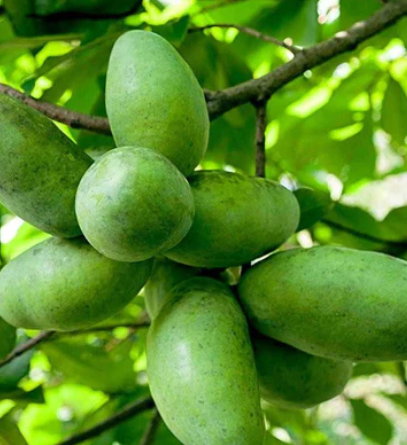
1. Pawpaw
(Asimina triloba)
Pawpaw is one of the most unusual fruits native to eastern North America. Its soft, custardy fruit has been compared to banana, mango, and melon.
It grows as a small understory tree and produces beautiful maroon flowers in spring before its fruit develops.
Edible: Fruit
Landscape role: Small understory tree
Bonus: Excellent wildlife value
2. American Persimmon
(Diospyros virginiana)
Don't judge this fruit before it's ripe!
An unripe persimmon can be intensely astringent, but a fully ripe American persimmon becomes incredibly sweet and soft.
The tree also provides beautiful fall color and wildlife habitat.
Edible: Fruit
Landscape role: Small to medium tree
Bonus: Fall color + wildlife food
3. Red Mulberry
(Morus rubra)
Red mulberry produces abundant, juicy berries that can be eaten fresh or used in jams, baked goods, and other foods.
It's also an important food source for birds and wildlife.
Edible: Fruit
Landscape role: Shade/fruit tree
Bonus: Wildlife powerhouse
4. Serviceberry
(Amelanchier spp.)
Serviceberries are one of the best examples of an edible plant that can look completely at home in a designed landscape.
They offer spring flowers, edible berries, and attractive fall color.
Edible: Berries
Landscape role: Small tree or large shrub
Bonus: Four-season interest
5. American Wild Plum
(Prunus americana)
This native plum produces small fruits that can be eaten fresh or used for preserves.
It can also form a dense thicket that provides valuable wildlife habitat.
Edible: Plums
Landscape role: Small tree/shrub
Bonus: Wildlife habitat
6. Eastern Redbud
(Cercis canadensis)
Redbud is usually planted for its beautiful pink spring flowers—but those flowers can also be eaten.
The young seed pods have traditionally been used as food as well.
Edible: Flowers and young pods
Landscape role: Ornamental small tree
Bonus: Stunning spring display
🌿 Edible Native Shrubs
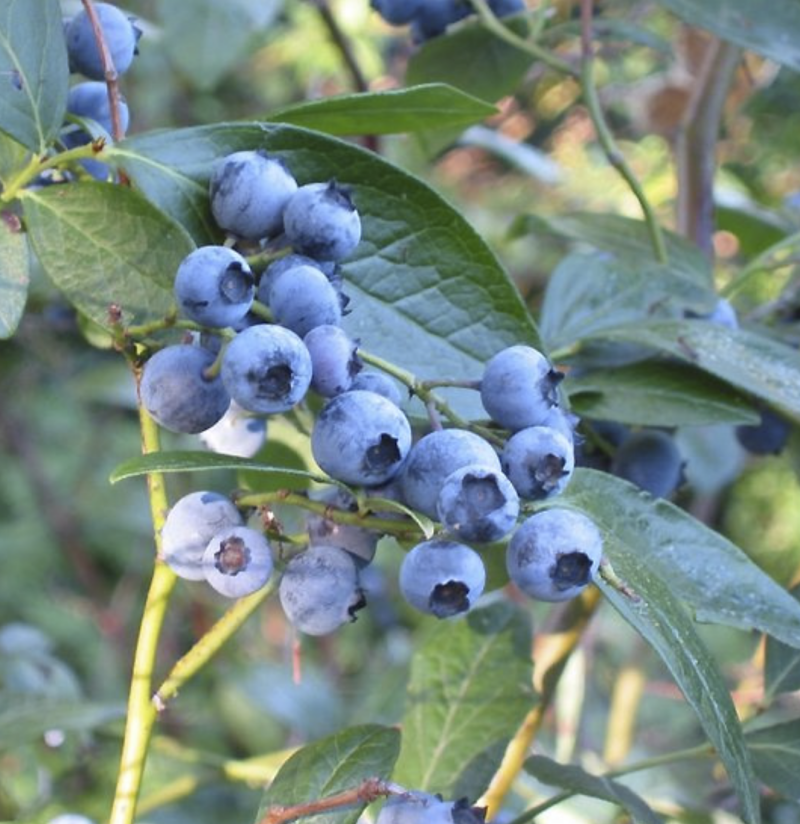
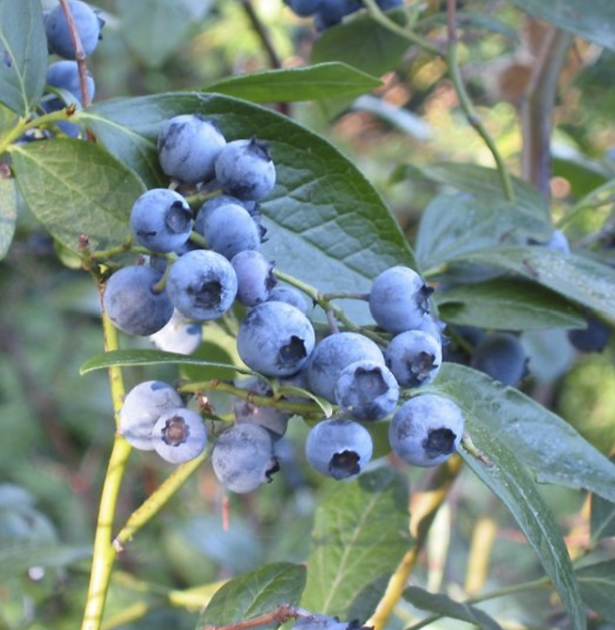
7. Highbush Blueberry
(Vaccinium corymbosum)
Yes, we can grow native blueberries in our region!
Highbush blueberry provides white spring flowers, delicious summer berries, and attractive fall color.
It also provides excellent wildlife value.
Edible: Blueberries
Landscape role: Shrub or informal hedge
Bonus: Pollinator and wildlife support
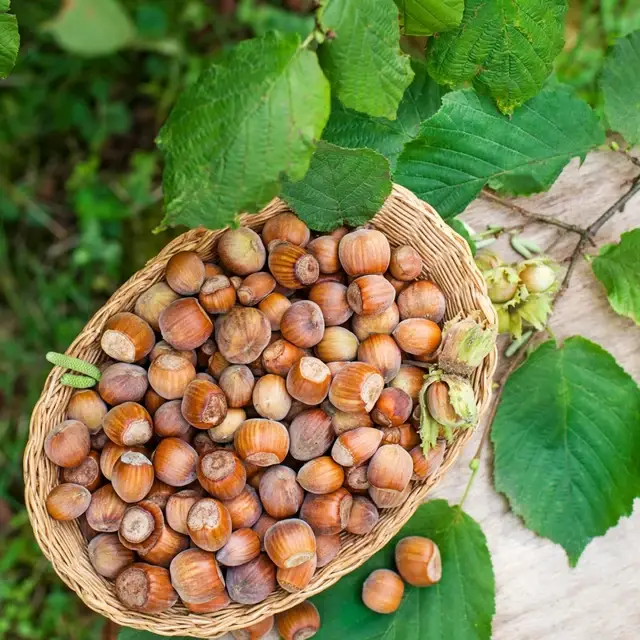
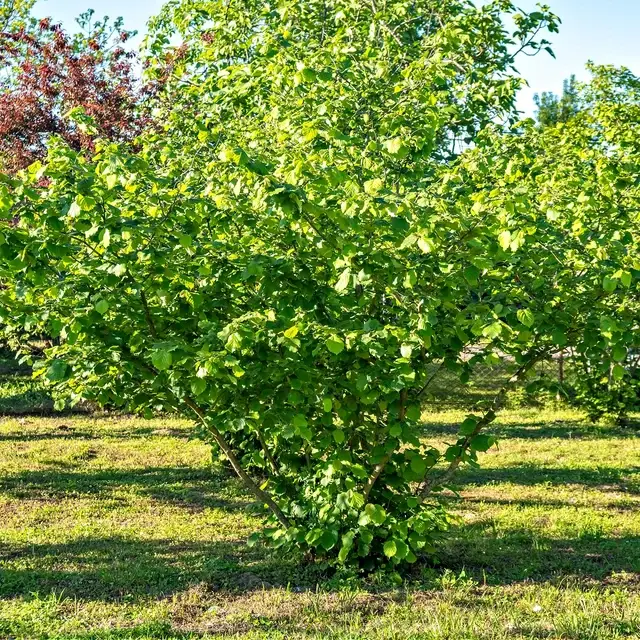
8. American Hazelnut
(Corylus americana)
Want a native nut crop?
American hazelnut produces edible nuts and grows as a multi-stemmed shrub rather than a giant tree.
It can be incorporated into the shrub layer of a food forest or naturalistic landscape.
Edible: Nuts
Landscape role: Large shrub
Bonus: Wildlife food
9. American Elderberry
(Sambucus canadensis)
Elderberry produces clusters of dark berries that can be cooked and used for syrups, jams, jellies, and other foods.
It also produces beautiful clusters of white flowers that attract pollinators.
Edible: Cooked berries
Landscape role: Large shrub
Bonus: Flowers + berries + wildlife
Important: Elderberries should not be eaten raw in quantity; proper preparation is important.
10. Beach Plum
(Prunus maritima)
This coastal native produces small plums and is particularly interesting for landscapes influenced by our coastal environment.
It can form a dense, attractive shrub and is useful for wildlife habitat.
Edible: Fruit
Landscape role: Coastal shrub
Bonus: Excellent for coastal gardens
11. American Beautyberry
(Callicarpa americana)
Those brilliant purple berries aren't just beautiful.
American beautyberry has a long history of traditional use, including the berries being cooked into jellies and other preparations.
Even if you never harvest it, the berries are an important wildlife food.
Edible: Berries when properly prepared
Landscape role: Ornamental shrub
Bonus: Incredible purple fall fruit
12. Spicebush
(Lindera benzoin)
Spicebush is a fantastic example of a plant that can provide food in multiple ways.
Its berries can be dried and used as a spice, while the leaves and twigs can be used to make tea.
And it's beautiful.
Edible: Berries, leaves, and twigs
Landscape role: Woodland/part-shade shrub
Bonus: Host plant for the spicebush swallowtail butterfly
🍇 Native Edible Vines
13. Muscadine Grape
(Vitis rotundifolia)
Muscadine grapes are one of the most exciting native fruits for the Southeast.
The thick-skinned grapes can be eaten fresh or used for juice, jams, jellies, and wine.
Train them on a sturdy trellis, fence, or arbor and they can become part of the architecture of the landscape.
Edible: Grapes
Landscape role: Trellised vine
Bonus: Wildlife + edible fruit
14. Maypop / Purple Passionflower
(Passiflora incarnata)
This native vine looks almost tropical.
It produces spectacular flowers followed by edible passionfruit.
Maypop can be trained along a fence or trellis and is also an important host plant for several butterfly species.
Edible: Fruit
Landscape role: Flowering vine
Bonus: Pollinator and butterfly habitat
15. American Groundnut
(Apios americana)
Here's a native food plant most people have never heard of.
American groundnut is a perennial vine that produces edible underground tubers and edible seeds.
It has a fascinating history as a traditional food plant and can be incorporated into a food-forest-style landscape.
Edible: Tubers and seeds
Landscape role: Perennial vine
Bonus: Native perennial food crop
16. Common Greenbrier
(Smilax rotundifolia)
Often considered a nuisance vine, greenbrier has another side.
Young shoots can be harvested and cooked, somewhat like asparagus, while the plant also provides valuable wildlife habitat.
This is one to use thoughtfully—it can be vigorous and thorny.
Edible: Young shoots
Landscape role: Naturalistic/woodland planting
Bonus: Excellent wildlife habitat
🌻 Native Perennial Food Plants
17. Jerusalem Artichoke / Sunchoke
(Helianthus tuberosus)
Despite its name, the Jerusalem artichoke isn't an artichoke—and it has nothing to do with Jerusalem.
It's a native sunflower relative grown for its edible underground tubers.
Above ground, it produces tall stems topped with yellow flowers that are excellent for pollinators.
Edible: Tubers
Landscape role: Tall perennial
Bonus: Pollinator habitat
Note: Sunchokes can spread aggressively, so give them room or consider containment.
18. Wild Strawberry
(Fragaria virginiana)
Wild strawberries produce much smaller fruit than supermarket strawberries, but they are packed with flavor.
They can work beautifully as an edible groundcover.
Instead of filling every inch of a yard with turf, imagine patches of native strawberry weaving between other plants.
Edible: Strawberries
Landscape role: Groundcover
Bonus: Excellent alternative to some areas of lawn
☕ Native Plants You Can Drink
19. Yaupon Holly
(Ilex vomitoria)
Want a caffeinated plant in your landscape?
Yaupon holly is an evergreen holly whose leaves can be dried and brewed into a naturally caffeinated tea.
It can be maintained as a shrub, hedge, or small tree and provides year-round structure.
Edible: Leaves for tea
Landscape role: Evergreen shrub/small tree
Bonus: Naturally caffeinated
The berries are not considered a food for people.
20. Sumac
(Rhus spp.)
Certain native sumacs produce clusters of red fruit that can be steeped in water to make a tart, refreshing drink sometimes called "sumac-ade."
For a Norfolk-specific planting, make sure you're identifying the correct native species before harvesting.
Edible: Fruit clusters for a beverage
Landscape role: Shrub/small tree
Bonus: Wildlife habitat
🌱 Native Doesn't Have to Mean Wild or Messy
One of the biggest misconceptions about native landscaping is that it has to look like an overgrown meadow.
It doesn't.
Native edible plants can be arranged intentionally:
Pawpaw + serviceberry can create a beautiful small-tree layer.
Blueberry + hazelnut + elderberry can form a productive shrub border.
Muscadine + maypop can climb a beautiful arbor.
Wild strawberry can fill spaces between larger plants.
Yaupon holly can provide evergreen structure.
And sunchokes can provide height and late-season flowers.
The result can look like a carefully designed landscape—not a vegetable garden.
🌎 Why Grow Native Food Plants?
Native edible landscaping can provide several benefits at once.
🌱 Food: Produce fruit, nuts, tubers, seeds, or beverages.
🐝 Pollinators: Flowers provide nectar and pollen.
🐦 Wildlife: Native plants support birds, insects, and other wildlife.
💧 Resilience: Deep-rooted and locally adapted plants can help build healthier soils and manage stormwater.
🌳 Beauty: Many provide flowers, fall color, interesting bark, berries, or evergreen structure.
🏡 Low-input landscaping: Once established in the right location, many native plants are adapted to our regional climate and growing conditions.
🌿 The Native Food Forest Is Already Here
We don't have to choose between a beautiful landscape and a productive one.
Norfolk yards can be places where people eat, pollinators thrive, wildlife finds food, and rain has somewhere to go.
Instead of asking:
“Where should I put my vegetable garden?”
Maybe we should start asking:
“How much of my landscape could be edible?”
That's the idea behind Root & Bloom Norfolk: creating landscapes that are beautiful, useful, resilient, and rooted in the place where we live.
Always positively identify plants before consuming them. “Native” does not automatically mean edible, and some edible plants require specific preparation. Never harvest plants from areas that may have been treated with pesticides or other chemicals.