🌧️ Weekend Post-Storm Yard Cleanup: A Hampton Roads Checklist
After a big Hampton Roads storm, it's tempting to grab a rake, empty everything, cut everything back, and make the yard look “clean” again.
But after heavy rain, your landscape actually needs something a little different.
The goal isn't to make your yard spotless. It's to help water move, prevent mosquito breeding, protect your soil, and preserve the small habitats that help your garden thrive.
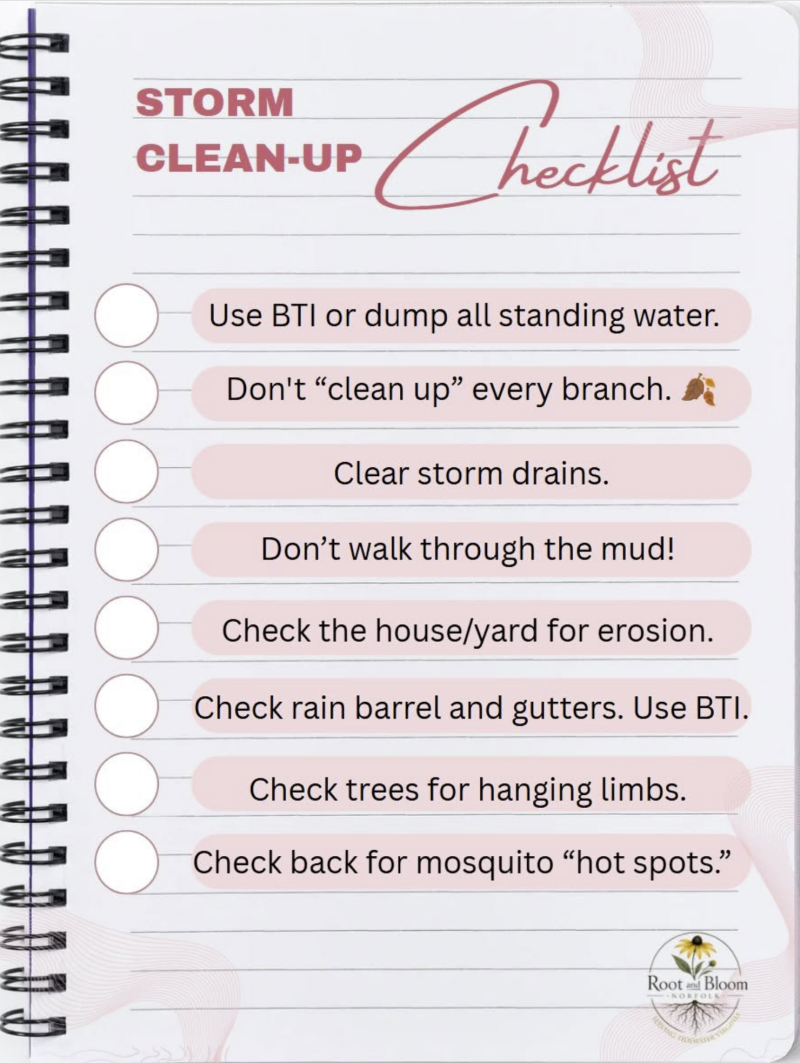
Here are 8 things to check this weekend after a major rain.
1. Dump Standing Water & Use BTI Where Water Can't Be Dumped
Your first stop should be standing water.
Walk around your property and dump water from anything that can easily be emptied:
- Plant saucers
- Buckets
- Children's toys
- Wheelbarrows
- Tarps
- Outdoor containers
- Clogged gutters
- Low spots
- Pool covers
Don't just look at the obvious places. Mosquitoes don't need much water to reproduce.
What about water you can't dump?
That's where BTI (Bacillus thuringiensis israelensis) can be useful.
BTI targets mosquito larvae and can be used in appropriate standing-water situations such as rain barrels, birdbaths, and certain drainage areas.
Always follow the product label for proper application and reapplication.
The goal is simple: dump water when you can, and use an appropriate treatment when you can't.
2. Don't “Clean Up” Every Branch 🌿
This might be the hardest one for anyone who likes a perfectly tidy yard.
You don't have to remove every branch.
Instead, consider leaving a small pile of branches, logs, or woody debris tucked into a garden border or beneath a shrub.
These little piles can provide shelter and habitat for:
- Beneficial insects
- Spiders
- Lizards
- Ground-dwelling wildlife
- Other garden predators
Think “tidy, not sterile.”
And the same goes for your plants.
Don't immediately cut back every flattened perennial. Some damaged stems and seedheads can still provide food, cover, and habitat for wildlife.
Give your plants a little time before deciding what actually needs to be removed.
3. Clear Storm Drains — But Don't Rake Everything Away
If it's safe to do so, check the storm-drain inlet near your property.
Remove obvious leaves, sticks, and debris that may be blocking the drain and preventing water from moving properly.
But there's an important distinction:
Clear the drain — not the entire neighborhood.
You don't need to rake every leaf and piece of organic matter off your property. Leaves and plant debris can contribute to healthy soil and provide habitat.
And most importantly, don't enter flooded streets or attempt to clear storm drains during active flooding.
Your safety comes first.
4. Don't Walk Through the Mud!
It can be tempting to start fixing muddy garden beds immediately.
Don't.
When soil is saturated, walking or driving heavy equipment across it can cause compaction and damage the soil structure.
Instead, give your garden time to drain naturally.
Resist the urge to immediately:
- Replace washed-out soil
- Rake every muddy area
- Replant flattened plants
- Move heavy equipment through the garden
Let it breathe.
Your soil is already doing important work by absorbing and moving water.
5. Look for Erosion
Once the water begins to recede, take a closer look at where it traveled.
Check around:
- Trees
- Foundation areas
- Pathways
- Driveways
- Garden edges
- Slopes
- Downspouts
Look for exposed roots, channels in the soil, or areas where soil has washed away.
And before you simply replace the missing soil, ask yourself:
Why did the water collect here in the first place?
Redirecting concentrated runoff may be a better long-term solution than repeatedly replacing washed-out soil.
Native plants, deep-rooted vegetation, rain gardens, and thoughtful drainage can all help slow and absorb stormwater.
6. Check Your Rain Barrel & Gutters
A major storm can put your rain barrel and gutters to the test.
If your rain barrel is full, check that the overflow is working properly and safely direct excess water into a planted area or another appropriate location where it can infiltrate into the landscape.
Make sure the screen is secure to help prevent mosquitoes from accessing the water.
If you're using BTI for mosquito control, follow the product label. Don't dump treated water into a storm drain. Where appropriate, allow water to infiltrate into your landscape instead.
Then look up.
Check your gutters for leaves, sticks, and other obstructions that could prevent water from flowing properly.
A clogged gutter can send a concentrated stream of water directly toward your foundation or garden beds.
7. Check Your Trees 🌳
Heavy rain often comes with strong winds, so take a few minutes to inspect your trees.
Look for:
- Broken branches
- Hanging limbs
- Cracked branches
- Newly exposed roots
- Other obvious storm damage
If you see a large or dangerous branch, don't climb the tree or attempt to remove it yourself.
Call a qualified tree professional when needed.
A damaged tree can be dangerous even when it doesn't immediately look unstable.
8. Check for Mosquito Hotspots Again in a Few Days
Your first cleanup isn't necessarily your last.
Some containers may collect water after the storm rather than during it.
A few days later, walk your yard again and look for anything holding water.
Check:
- Plant saucers
- Toys
- Buckets
- Tarps
- Gutters
- Containers
- Low spots
- Rain barrels
- Birdbaths
Then dump, drain, cover, or appropriately treat anything that is holding water.
A second walk-through can make a big difference when it comes to preventing mosquito breeding.
🌱 The Root & Bloom Takeaway
After a big rain, the goal isn't to make your yard perfectly spotless.
It's to:
Help water move.
Prevent mosquito breeding.
Protect your soil.
Preserve habitat.
A healthy landscape doesn't have to be perfectly manicured.
A few branches can provide habitat.
Flattened plants can recover.
Leaves can feed the soil.
Deep roots can help hold soil in place.
And native plants can help your landscape better handle the next storm.
So after the next Hampton Roads downpour, don't just ask:
“What do I need to clean up?”
Ask:
“What is my yard telling me?”
Where did the water go?
Where did it collect?
Where did soil wash away?
Where did your plants help?
And what could you change before the next storm?
Because we can't control the rain.
But we can make our landscapes better prepared to receive it.
🌿 Every yard can be part of the solution.
Root & Bloom Norfolk
Growing resilient landscapes, one yard at a time.