There’s something mighty special about seeing a monarch butterfly float through a summer garden.
One minute, you're watering the flowers or pulling a few weeds, and the next, there she is—those beautiful orange wings catching the afternoon sun.
Here in Hampton Roads, we're fortunate to be part of the monarchs' incredible journey. And one of the sweetest things we can do to welcome them is simple:
Plant milkweed. 🦋
Milkweed isn't just another pretty flower in the garden. It is the host plant monarch caterpillars need to survive.
Think of it as the monarch nursery.
Milkweed: The Monarch's Nursery
Adult monarchs will happily sip nectar from many different flowers, but their babies are a little more particular.
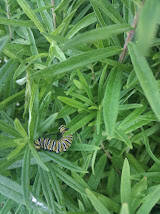
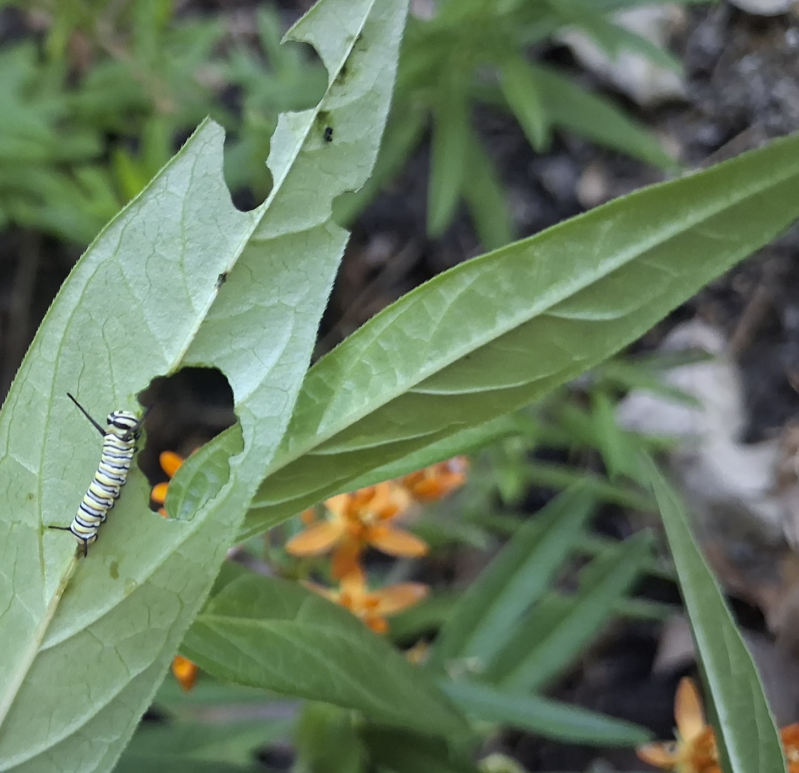
Monarch caterpillars eat milkweed and milkweed alone.
Mama monarchs search for milkweed plants where they can lay their eggs. Once those tiny eggs hatch, the caterpillars settle in for a good meal of milkweed leaves.
And here's one of nature's clever little tricks: milkweed contains compounds called cardiac glycosides. The caterpillars consume these compounds and retain them as they grow, helping make them distasteful to many predators.
So when you plant milkweed, you're not simply adding flowers to your yard.
You're putting out a welcome mat for monarch families. 🌿
Monarchs Pass Through Hampton Roads
Most of us don't think of Norfolk, Virginia Beach, Chesapeake, or the surrounding coastal communities as part of a butterfly migration route.
But we are.
The eastern monarch population makes one of the most remarkable migrations on Earth.
Monarchs spend the winter in the mountains of central Mexico. As spring arrives, they begin their journey north, moving through Texas and across the United States and Canada.
But here's the amazing part:
No single butterfly makes the entire trip.
Several generations are born along the way, continuing the journey north.
Then, toward the end of summer, something remarkable happens.
A special generation of monarchs begins heading south.
These butterflies can live for months rather than weeks because their bodies enter a state called reproductive diapause. Instead of immediately reproducing, they conserve their energy for the long trip back to Mexico.
And Hampton Roads is right along the way.
🌊 Our coastal region matters.
Monarch researchers have documented migrating monarchs along the Virginia coast and Delmarva Peninsula. Monarch Watch has even documented monarchs moving through downtown Norfolk during fall migration.
Just imagine that.
A monarch that has traveled hundreds or thousands of miles may pass right through our own neighborhoods.
It may stop in a backyard garden.
It may rest along a roadside.
It may sip nectar from a native flower in someone's front yard before continuing south.
That's why every little patch of habitat matters.
Which Milkweed Should We Plant?
This is where choosing the right plant becomes important.
There are many species of milkweed, but they aren't all native to Virginia.
At Root & Bloom, we're big believers in right plant, right place—and when we can choose a native plant, that's where we'd rather start.
Butterfly Weed
(Asclepias tuberosa)
Let's clear up a common misconception.
Butterfly weed is native to Virginia. And no, it is not an invasive plant.
Its bright orange flowers are absolutely gorgeous, and it is a wonderful choice for sunny, well-drained areas.
It can spread under the right conditions, which sometimes leads people to call it "invasive." But spreading readily and being invasive are two very different things.
Butterfly weed belongs here.
And those cheerful orange blooms are hard to beat.
Swamp Milkweed
(Asclepias incarnata)
Don't let the word "swamp" scare you off.
Swamp milkweed is a lovely choice for moist areas, including rain gardens and other places where the soil stays damp.
Its clusters of pink flowers are beautiful, and they're loved by butterflies and other pollinators.
For Hampton Roads gardeners dealing with wet spots, this one deserves a place on your list.
Common Milkweed
(Asclepias syriaca)
Common milkweed is another native monarch host plant.
It can spread enthusiastically through underground rhizomes, so it isn't necessarily the best choice for a tiny, carefully contained flower bed.
But if you have a little more room and don't mind letting things get a bit wild around the edges, it can make a wonderful addition to a naturalized planting.
🚫 A Word About Tropical Milkweed
You'll sometimes see tropical milkweed (Asclepias curassavica) sold at garden centers.
Monarchs absolutely will use it.
But here's the important part:
Tropical milkweed is not native to Virginia.
For those of us creating native landscapes here in Hampton Roads, there are plenty of beautiful Virginia-native options.
Why not give those a little room in the garden instead?
There's something satisfying about planting something that has been part of our local ecosystem long before any of us came along.
"Something Is Eating My Milkweed!"
Good!
Well... mostly. 😉
If you plant milkweed, you should expect to see some chewing.
That's part of the deal.
A healthy pollinator garden is not supposed to look like a sterile showroom. It's supposed to have a little hustle and bustle.
You may see:
🟠 Oleander aphids
🐛 Milkweed bugs
🪲 Milkweed beetles
🦋 Monarch caterpillars
🐞 Lady beetles
🪰 Beneficial insects
And that's okay.
In fact, seeing insects on your milkweed can be a sign that your garden is doing exactly what you hoped it would do.
What About Those Orange Aphids?
Those bright yellow-orange clusters on milkweed are usually oleander aphids.
They can look alarming when you first discover them.
But before reaching for the insecticide, take a breath.
If your milkweed is healthy and growing well, a few aphids generally aren't something to lose sleep over.
And those aphids are food for beneficial insects, including lady beetles and lacewings.
Nature has a way of bringing her own cleanup crew.
If they're getting out of hand:
Try the gentlest solution first.
💦 Knock them off with a strong stream of water.
✂️ Prune heavily infested stems if necessary.
🐞 Give beneficial insects a chance to do their job.
And most importantly, look carefully before doing anything.
If monarch eggs or caterpillars are present, you don't want to accidentally harm the very creatures you're trying to help.
Milkweed Is Only Part of the Story
While milkweed is essential for monarch caterpillars, adult monarchs need something else:
NECTAR!
That's why a good monarch garden shouldn't be nothing but milkweed.
Plant a variety of native flowers that bloom throughout the growing season so adult butterflies have something to sip on when they arrive.
Native asters, goldenrods, mountain mint, blazing star, seaside goldenrod, and other regional natives can help provide nectar when monarchs need it most.
This becomes particularly important during the fall migration.
Those butterflies heading south need to build up energy for their long journey.
Think of it as putting a little roadside diner along the monarch highway. 🦋
🏡 Your Backyard Can Be Part of the Journey
We sometimes imagine conservation as something that happens in a big wildlife refuge somewhere far away.
But conservation can happen right outside your front door.
One milkweed plant.
One native flower bed.
One rain garden.
One school garden.
One HOA planting.
One neighbor deciding to leave a little more room for nature.
It all adds up.
Here in Hampton Roads, we're building communities that have to live with flooding, storms, heat, development, and changing environmental conditions.
Native plants are one small but meaningful part of creating landscapes that are beautiful, beneficial, and better suited to the place we call home.
And sometimes, resilience looks like a monarch settling onto a milkweed leaf in your backyard.
🦋 So, Should You Plant Milkweed?
We sure think so.
Choose a Virginia-native species that matches your yard's conditions.
Give it plenty of sunshine when appropriate.
Let it grow.
Don't panic when something starts nibbling.
And keep your eyes open.
Because one summer morning, you just might walk outside and discover a tiny monarch caterpillar munching away.
And when you do, remember:
You didn't just plant a flower.
You planted a little piece of the monarch's journey.
🌱 Plant native.
🦋 Welcome wildlife.
🌊 Build resilient landscapes.
And maybe leave a little room for nature to surprise you.
That's Root & Bloom.
🌸 Want to add Common Milkweed to your garden? Here’s where you can find this beautiful native! 🌿💕
👉https://collabs.shop/kc30xf
We may earn a small commission if you purchase through this link, at no extra cost to you. Thank you for supporting Root & Bloom! 🌱💚