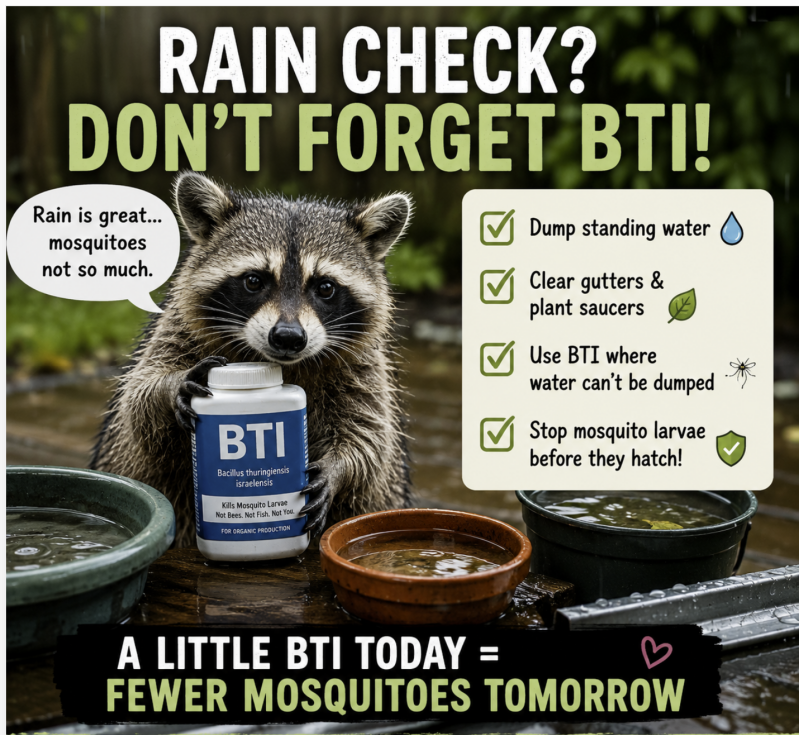
How BTI Can Help Control Mosquito Larvae Naturally
After a big summer rain, our yards can quickly become mosquito nurseries.
A little standing water in a plant saucer, clogged gutter, bucket, birdbath, rain barrel, or low spot can be enough for mosquitoes to lay eggs. Within days, those tiny pools can become breeding grounds.
So what can you do when you can't dump the water?
That's where BTI comes in.
🦟 What Is BTI?
BTI stands for Bacillus thuringiensis israelensis. It is a naturally occurring soil bacterium that is used to control the larvae of mosquitoes, black flies, and fungus gnats.
BTI works by producing proteins that are toxic to certain insect larvae when they consume it. Importantly, it is specifically targeted toward these larvae and does not work by killing adult mosquitoes.
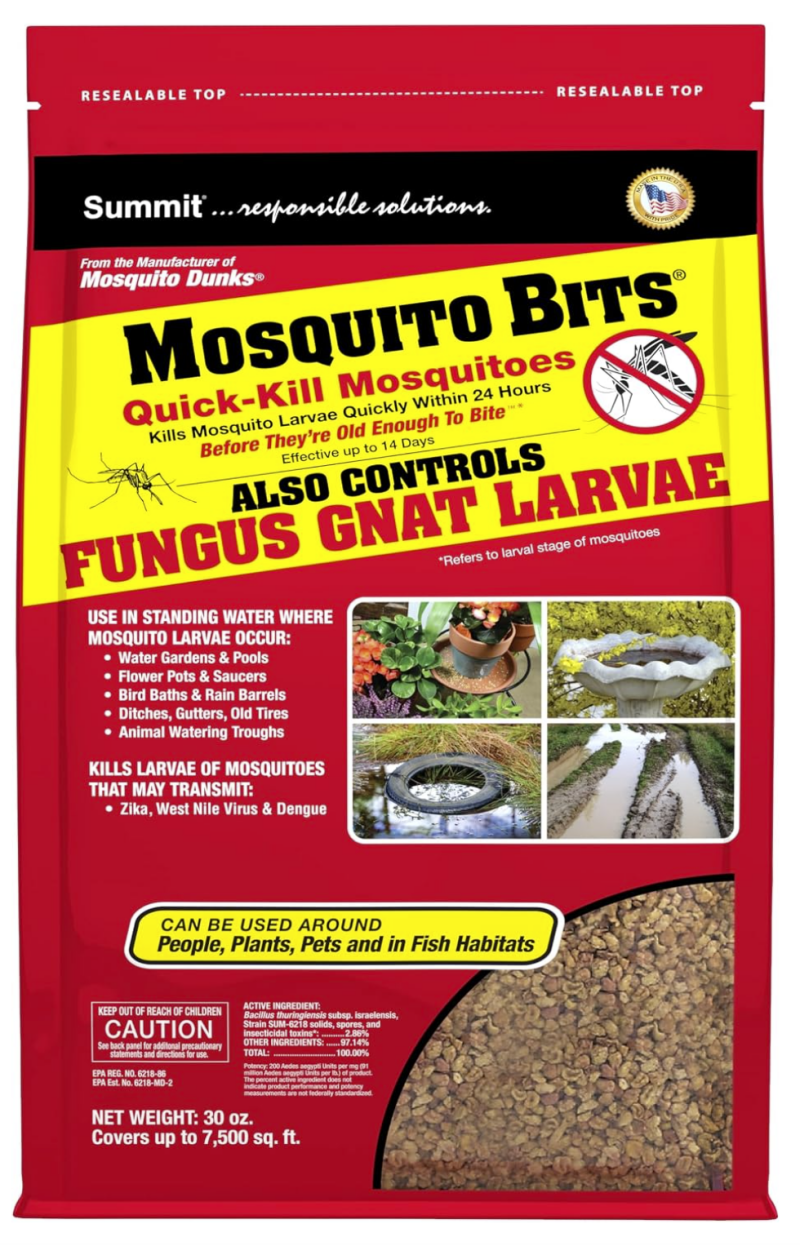
You may have seen BTI products sold as mosquito dunks, bits, or granules.
💧 When Should You Use BTI?
The best approach to mosquito control is always:
Dump it first. Treat it when you can't.
After rainfall, walk around your property and look for places where water has collected.
Check:
- 🌱 Plant saucers
- 🪣 Buckets and containers
- 🛁 Birdbaths
- 🌧️ Rain barrels
- 🏡 Clogged gutters
- 🛝 Children's outdoor toys
- 🪴 Decorative containers
- 🌿 Low areas of the landscape
- 💦 Drainage areas
- 🏊 Pool covers
If you can safely empty the water, dump it out.
If the water needs to remain—such as in a rain barrel or certain drainage areas—BTI can be a useful tool for controlling mosquito larvae.
🌿 BTI + Native Landscaping = A Better Approach
At Root & Bloom, we're interested in solutions that work with nature rather than against it.
That doesn't mean ignoring mosquitoes. It means looking for targeted approaches that address the problem while reducing unnecessary impacts on the rest of the ecosystem.
BTI can be one piece of a larger, environmentally conscious mosquito-management strategy.
Other important steps include:
1. Eliminate unnecessary standing water.
The easiest mosquito is the one that never gets the chance to reproduce.
2. Improve drainage.
Native plants, rain gardens, healthy soil, and thoughtful landscaping can help manage stormwater around your property.
3. Keep gutters flowing.
A clogged gutter can hold enough water for mosquitoes to reproduce.
4. Maintain birdbaths.
Change the water regularly and keep the basin clean.
5. Protect beneficial insects.
Avoid broad-spectrum insecticides when a targeted solution will do the job.
🌧️ Why This Matters After a Storm
Here in Hampton Roads, summer storms can dump a lot of water in a short amount of time.
That rainfall is important for our landscapes—but it can also create dozens of tiny temporary water sources.
You don't necessarily need a pond-sized puddle to have a mosquito problem.
A bottle cap can be enough.
That's why a quick post-storm yard check can make such a difference.
Walk your property after significant rainfall, dump what you can, and use BTI where water must remain.
🐝 What About Bees, Butterflies & Other Wildlife?
One reason BTI is appealing is its targeted nature.
BTI is intended to affect specific groups of insect larvae rather than functioning as a broad-spectrum insecticide. When used according to the product label, it can be a more targeted option for mosquito-larvae control.
As with any pest-control product, always read and follow the label directions for the specific BTI product you're using.
🌱 Think Prevention, Not Just Pesticides
Mosquito control doesn't have to mean spraying your entire yard.
Sometimes the most effective strategy is simply changing the environment that mosquitoes need to reproduce.
Remove the water. Improve the drainage. Keep necessary water treated. Create a healthier landscape.
That's the Root & Bloom approach:
🌱 Native plants
💧 Better stormwater management
🦋 Support for pollinators and wildlife
🦟 Targeted mosquito prevention
🌧️ More resilient communities
Because a resilient landscape isn't just beautiful.
It works.
🌿 Root & Bloom Tip
After the next big rain, grab a bucket and take a 10-minute walk around your yard.
Look for standing water.
Dump what you can. Treat what you can't.
And remember: mosquito prevention starts before you ever see an adult mosquito.
Have you checked your yard after the latest rain? 🌧️🦟
Tell us what you found in the comments—and share this post with a neighbor who could use a post-storm mosquito check!